 Skip to content
Guesswork has no place in Midvale, 84047 sewer management. At Let's Fix Plumbing, we utilize high-definition fiber-optic cameras and sonic tracing to pinpoint the exact source of your mainline distress without unnecessary excavation. Whether you're dealing with root intrusion or a shifted joint, we provide a clear, visual diagnosis before any work begins, ensuring a targeted and efficient repair.
If you’re facing recurring backups in Midvale, 84047, it’s time to see what’s actually happening underground. Let the specialists at Let's Fix Plumbing provide the clarity you need. Book your high-tech sewer inspection online today.

5 Warning Signs Your Main Sewer Line is Collapsing
Recognizing the Red Flags of Structural Failure
A collapsing sewer line is a progressive disaster that often starts with subtle symptoms. The most common indicator is localized sinkholes or unusually lush, green patches in your lawn where the soil is being "fertilized" by escaping sewage. Inside the home, you may notice multiple fixtures backing up simultaneously or a persistent "sewage smell" that doesn't go away after cleaning. These are signs that the pipe's structural integrity is compromised, allowing dirt to enter and block the flow entirely.
The Dangers of "Cyclical" Backups
If you find yourself needing to snake your drains every few months, you aren't dealing with a simple clog; you are likely dealing with a pipe that is losing its shape. As a pipe collapses, it creates "bellies" or jagged edges that catch debris instantly. This cyclical nature of clogs is a major warning that the pipe walls are bowing inward. Ignoring these signs can lead to a complete structural cave-in, which can cause foundation shifts and massive interior flooding.
Why Professional Imaging is the Only Way to Confirm
You cannot diagnose a collapse from the surface. Our team uses high-definition sewer cameras to travel deep into the line and see the exact state of the pipe walls. We look for "fracture patterns" and soil intrusion that indicate a collapse is imminent. By catching a failing line before it completely caves in, we can often utilize less invasive repair methods, saving you from the high cost of a total emergency excavation.
How Epoxy Lining Can Seal Cracks in Your Main Line
The Power of "Pipe-within-a-Pipe" Technology
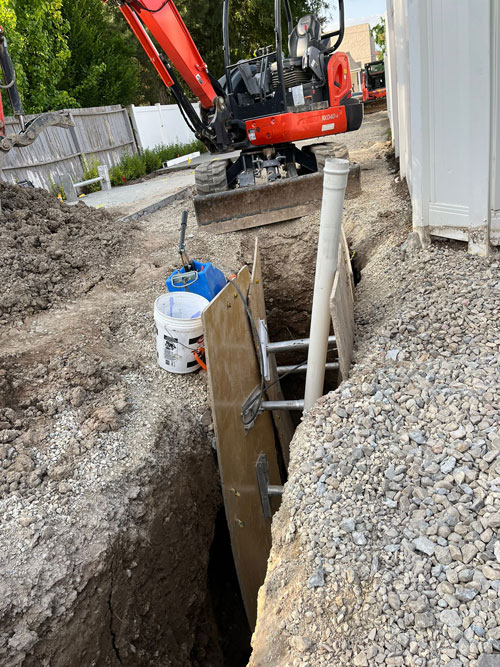
Epoxy lining, or CIPP, is a revolutionary trenchless repair method that creates a brand-new, structural pipe inside your old, damaged one. We insert a flexible liner saturated with a specialized epoxy resin into your existing sewer line. Once in place, the liner is inflated and "cured" (hardened), forming a seamless, jointless, and smooth interior wall. This process effectively "seals" every crack, hole, and failed joint in the original pipe without a single shovel hitting the dirt.
Why Epoxy is the Ultimate Root Defense
Because epoxy lining creates a single, continuous pipe from your house to the city main, there are no joints for tree roots to enter. Traditional pipes fail most often at the connections; epoxy eliminates these weak points entirely. This makes it an ideal solution for homes with mature landscaping or "protected" trees that cannot be disturbed. The resulting pipe is not only stronger than the original but has a vastly improved flow coefficient.
Precision Engineering for a Lifetime Fix
Applying epoxy lining is a high-tech process that requires expert calibration. The resin must be mixed to the exact specifications for your local climate and pipe material to ensure a perfect bond. Our technicians are certified in the latest lining technologies, providing a repair that is often stronger than the original pipe material. When you choose epoxy lining, you are getting a 50-year solution that preserves your yard and your peace of mind.
Why Choose Let's Fix Plumbing
- Locally Owned & Operated
- 24/7 Emergency Services
- Licensed & Uniformed Technicians
- 5-Star Google and Yelp Reviews
- Upfront Estimates
- Easy Online Appointments
3 Things Every New Homebuyer Should Know About the Sewer Line
1. The Standard Home Inspection Doesn't Cover It
Most homebuyers assume that a general home inspection includes the sewer line, but this is a dangerous misconception. A standard inspector only checks if the toilets flush; they do not look at the condition of the buried pipes. Before you sign the closing papers, you should always insist on a Sewer Scope. This small investment can reveal thousands of dollars in hidden damage—like root intrusions or "bellied" pipes—before you inherit the problem.
2. "Age of Home" is the Best Predictor of Failure
If you are buying a "charming" historic home, you are likely buying a clay or cast-iron sewer line that is at or beyond its life expectancy. Even if the drains seem to work during the walkthrough, the "surge" of a new family moving in can cause a weakened system to fail immediately. Understanding the material of the sewer line is just as important as knowing the age of the roof or the HVAC system.
3. You Have Leverage Before the Sale
If a sewer scope reveals issues, you can negotiate with the seller to have the line repaired or replaced before you move in. Alternatively, you can ask for a "closing credit" to cover the cost of the work. Once you take the keys, the sewer line is 100% your financial responsibility. Hiring a professional to perform a pre-purchase inspection is the smartest move you can make to protect your new investment.
Contact Let's Fix Plumbing Today!
Let's Fix Plumbing is a fully licensed and insured plumbing business servicing the Midvale, 84047 area. We offer a broad range of sewer line replacement services in Utah. Give us a call today at (801) 346-9896 to schedule service.