 Skip to content

Discovering a puddle of water around the base of your traditional water heater’s tank is a homeowner’s nightmare. A leaking water heater is not just a plumbing problem; it’s an emergency that can lead to significant water damage, mold growth, and a costly replacement. Whether it’s a slow drip or a steady stream, you need to act fast to minimize the damage to your Utah home. Knowing the right steps to take in this situation can mean the difference between a manageable repair and a catastrophic flood.
Step 1: Shut Off the Power or Gas Supply Immediately
Your first priority is safety. You need to cut the power source to the unit to prevent a dangerous situation.
- For an Electric Water Heater: Go to your home’s main electrical panel (breaker box). Find the circuit breaker labeled “Water Heater” and switch it to the “OFF” position. It might be a large, double breaker.
- For a Gas Water Heater: Look for a dial or switch on the gas control valve, which is located on the front of the water heater near the bottom. Turn this dial to the “OFF” position. You should no longer see a pilot light flame through the small window, if your model has one. If you smell gas, leave the house immediately and call your gas company from a safe distance.
Step 2: Turn Off the Water Supply
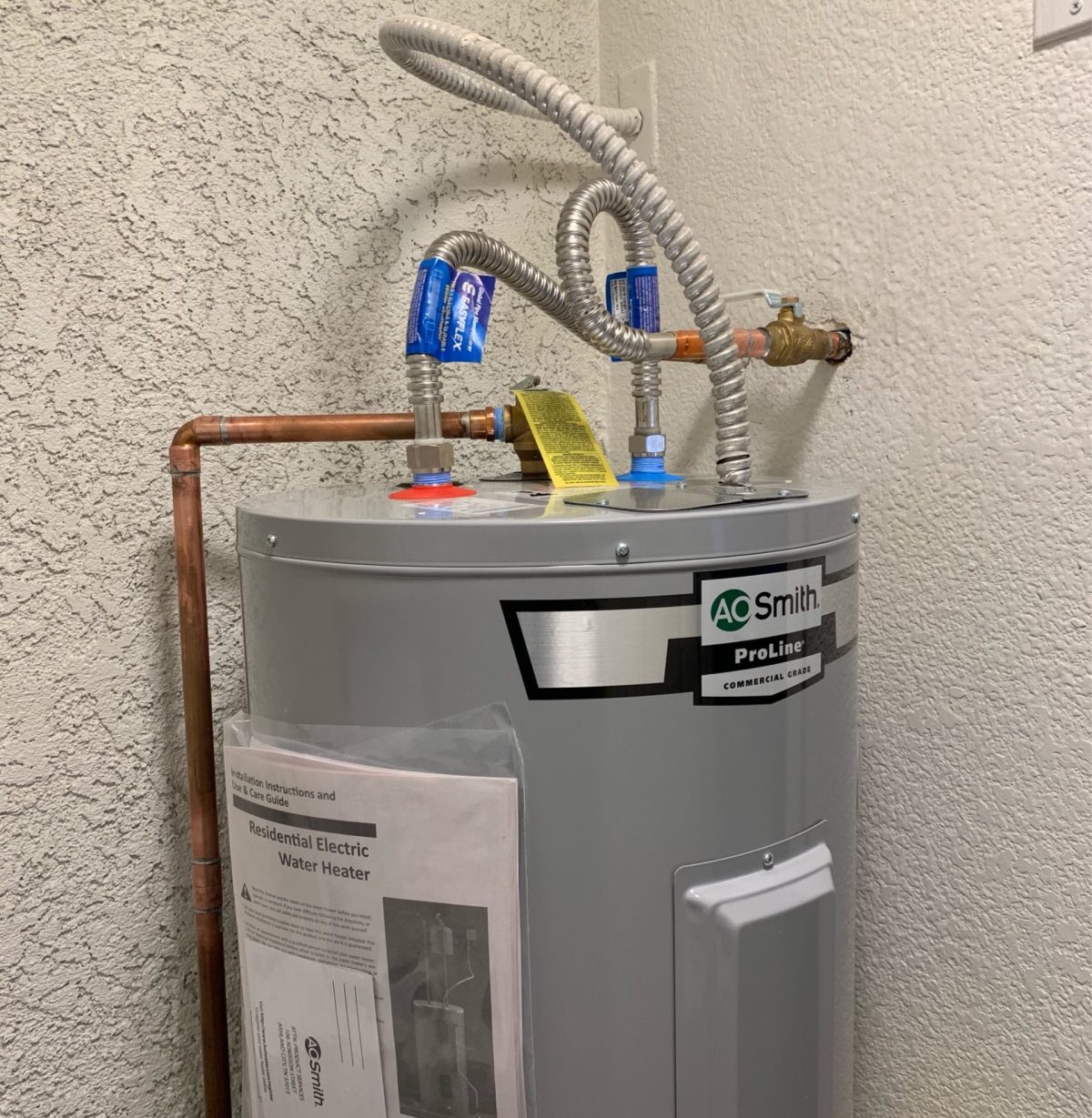
Next, you need to stop the flow of water into the leaking tank. There should be a shutoff valve on the cold water pipe that enters the top of the water heater. It will typically have a wheel-style handle or a lever-style handle.
- Turn the wheel handle clockwise until it is tight.
- Turn the lever handle so it is perpendicular (at a 90-degree angle) to the pipe.
If you cannot find this valve or it won’t turn, you will need to shut off the main water supply to your entire house.
Step 3: Drain the Tank (Optional but Recommended)
If it is a significant leak and you can do so safely, draining the remaining water from the tank can prevent further water damage. Attach a standard garden hose to the drain valve located at the bottom of the water heater tank. Run the other end of the hose to a floor drain, a bathtub, or outside to a safe location. Open the drain valve and also open a hot water faucet somewhere in the house to allow air to enter the tank and help it drain faster. As home maintenance guides from sources like The Family Handyman explain, this process can take some time.
Step 4: Call a Professional Plumber
Once you have safely contained the situation, it’s time to call a professional. A leaking water heater tank is almost always a sign that the unit has reached the end of its life due to internal corrosion. The tank itself cannot be repaired; the entire unit will need to be replaced. A licensed plumber can assess the situation, recommend the right size and type of new water heater for your home, and perform the installation safely and correctly. According to the U.S. Department of Energy, most tank-style water heaters have a lifespan of 10-15 years, and a leak from the tank itself is a definitive sign of failure.
Your Utah Traditional Water Heater Experts
A leaking water heater is a plumbing emergency that requires immediate action. By following these steps, you can safely manage the situation and minimize the damage to your home. For homeowners throughout Utah, the experienced professionals at Lets Fix Plumbing are ready to help. We provide expert repair, service, and replacement of traditional water heaters. Contact us immediately for emergency service.