 Skip to content
Across the diverse communities of Bluffdale, 84065, a functional sewer line is essential for daily life. Signs like gurgling drains, foul odors, or soggy spots in your yard all point to a serious issue underground.
Let's Fix Plumbing is your dedicated partner for all sewer line repair and replacement needs, serving properties throughout Bluffdale, 84065 with precision and professionalism. We are committed to protecting your property. Visit our website to connect with our team and book your sewer service today.

Sewer Repair vs. Replacement: Which One Do You Actually Need?
Assessing the Extent of Pipe Degradation
The choice between a targeted repair and a full replacement depends on the "health" of the entire line. If your sewer line is generally in good condition but has one specific break caused by a fence post or a single tree root, a spot repair is often sufficient. However, if the pipe is made of an outdated material like Orangeburg or thin-wall cast iron and shows signs of widespread "pitting" or multiple cracks, a single repair is just a temporary fix for a system that is failing as a whole.
Considering the Age and Material of Your Lines
Plumbing materials have a finite lifespan. Clay pipes are prone to joint separation, while cast iron eventually rusts from the inside out. If your home is over 50 years old and you are experiencing frequent issues, a full replacement is often the more "financially sound" move. Replacing the line now prevents the need for multiple, expensive emergency repairs over the next few years. We provide a full "cost-benefit analysis" after our camera inspection to help you decide which path offers the best long-term value.
Why Professional Guidance Saves You Money
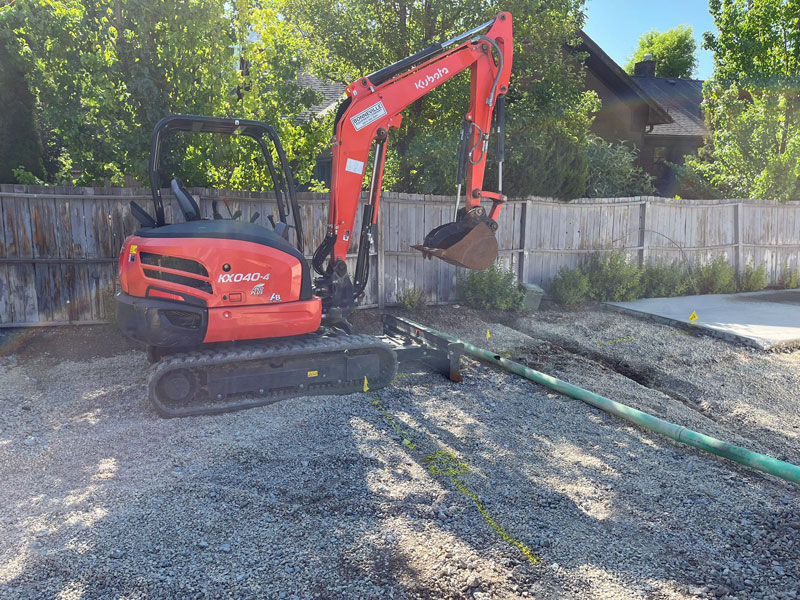
It is easy to choose the "cheapest" fix in the moment, but that often leads to higher costs down the road. Our team evaluates the "slope," the material, and the proximity of trees to give you an honest recommendation. If a replacement is necessary, we can often use trenchless technology to keep the costs down and your landscape intact. Hiring a professional ensures that you aren't just "throwing money at a hole in the ground," but are making an informed investment in your property’s future.
The Lifecycle of a Sewer Pipe: When to Call the Pros
Understanding Material Longevity
Every sewer pipe has an expiration date determined by its composition. Old-fashioned clay pipes can last 50 to 60 years but are highly susceptible to joint failure and root intrusion. Cast iron is durable but prone to internal corrosion after 40 years, while Orangeburg (tar-paper) pipes rarely last beyond 30 years without collapsing. Knowing the age of your home is the first step in predicting when your underground infrastructure will require professional intervention.
Environmental Stress and Pipe Aging
The lifecycle of your pipe isn't just about age; it’s about the environment. Soil acidity, heavy vehicle traffic over the line, and aggressive local tree species can shave decades off a pipe's life. If you are living in an older property, the system is likely operating on "borrowed time." A proactive professional assessment can identify if your pipes are reaching their limit before a catastrophic burst occurs, allowing you to plan for a replacement on your own terms.
The Value of "End-of-Life" Inspections
When a pipe reaches the end of its functional lifecycle, it becomes brittle. Standard cleaning methods that worked for years can suddenly cause a fragile pipe to shatter. We provide "lifecycle inspections" that evaluate the wall thickness and joint integrity of your sewer main. By hiring a professional to assess the remaining life of your pipes, you avoid the shock of an emergency failure and can transition to modern, lifetime-rated materials like PVC or HDPE seamlessly.
Why Choose Let's Fix Plumbing
- Locally Owned & Operated
- 24/7 Emergency Services
- Licensed & Uniformed Technicians
- 5-Star Google and Yelp Reviews
- Upfront Estimates
- Easy Online Appointments
What is CIPP? Understanding Cured-in-Place Pipe Lining
The Engineering Behind Seamless Restoration
Cured-in-Place Pipe (CIPP) is the flagship technology of the trenchless revolution. It involves taking a flexible, felt-like tube saturated with high-strength liquid resin and "inverting" it into your damaged sewer line using air or water pressure. Once the liner is fully expanded against the host pipe's walls, it is cured—either through ambient temperatures, hot water, or UV light—until it hardens into a rock-solid, structural pipe. This process essentially builds a brand-new, seamless conduit inside your old, failing one.
Why CIPP is the Preferred Choice for Difficult Access
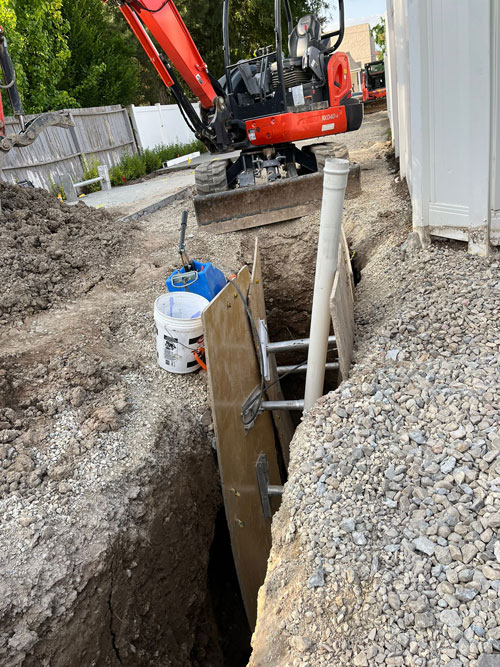
Traditional "dig and replace" methods are often impossible or prohibitively expensive if your sewer line runs under a swimming pool, a structural foundation, or expensive custom landscaping. CIPP requires only a single access point (usually a cleanout), making it the ultimate solution for "unreachable" pipes. By utilizing the existing pipe as a mold, we can restore your system's integrity without the collateral damage of heavy machinery and trenching.
The Durability of Modern Resin Technology
A CIPP liner isn't just a temporary patch; it is a standalone structural repair with a design life of 50 years or more. The resulting pipe is corrosion-resistant, root-proof, and has a smoother interior than traditional clay or cast iron, which actually improves your home's drainage speed. Our team precisely calculates the resin-to-liner ratio to ensure a perfect fit every time. Hiring a professional for CIPP ensures that your "invisible" repair is done with the highest engineering standards.
Contact Let's Fix Plumbing Today!
Let's Fix Plumbing is a fully licensed and insured plumbing business servicing the Bluffdale area. We offer a broad range of sewer line replacement services in Utah. Give us a call today at (801) 346-9896 to schedule service.