 Skip to content
From historic homes to new developments in Cedar Fort, 84013, every property relies on a functioning sewer main. When this essential line is blocked, cracked, or collapsed, you need a swift solution. Let's Fix Plumbing delivers just that, specializing in both targeted sewer line repairs and full-scale replacements across Cedar Fort.
Our experienced technicians ensure the job is done right. When your sewer line fails in Cedar Fort, 84013, turn to Let's Fix Plumbing. Contact us online to get started.
The Difference Between a Simple Clog and a Cracked Sewer Pipe
Evaluating "Surface" Clogs vs. Structural Breaks
A "simple" clog is typically a localized obstruction made of hair, grease, or foreign objects that can be removed with an auger or jetter. A cracked pipe, however, is a structural failure where the pipe wall has physically separated. While both cause slow drains, a crack is much more dangerous because it allows the surrounding soil to wash into the pipe, which eventually leads to a sinkhole. If your drains clear temporarily but stop again within days, you aren't dealing with a clog; you're dealing with a breach.
How Cracks "Invite" Secondary Problems
Once a sewer pipe develops a crack, it becomes a beacon for tree roots. Roots are attracted to the moisture and nutrients leaking out of the break. They will enter the crack and expand, eventually shattering the pipe from the inside. Furthermore, a crack allows water to escape the pipe, which can erode the soil supporting your foundation. This is why a "clog" that keeps returning must be inspected with a camera—to ensure you aren't just cleaning a pipe that is actually falling apart.
Professional Solutions for Cracked Infrastructure
Treating a cracked pipe as a simple clog is a recipe for disaster. We use specialized imaging to determine the length and severity of the crack. Depending on the damage, we can often use epoxy lining to "seal" the crack from the inside without digging. This turns your old, cracked pipe into a seamless, brand-new one. Hiring a professional ensures you get a permanent structural repair rather than a temporary "cleaning" that ignores the underlying hole in your pipe.
Don't Wait for a Catastrophe: Proactive Sewer Line Solutions Are Here.
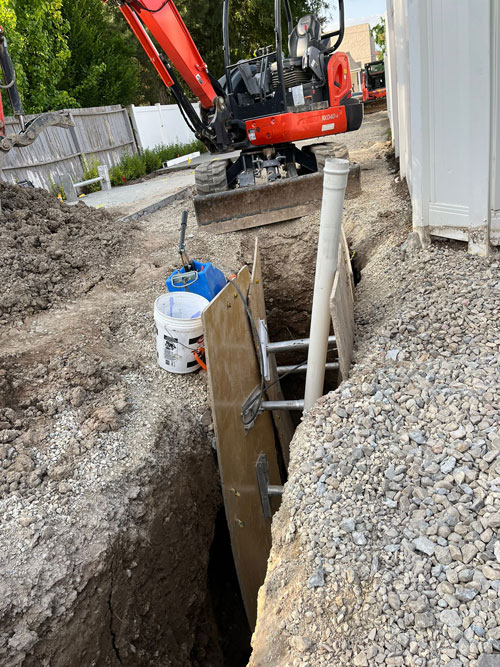
The worst time to deal with your sewer line is when it’s an emergency—think a raw sewage backup in your basement on a holiday weekend. This "catastrophe" scenario is stressful, messy, and far more expensive than planned maintenance. The smart, modern alternative is a proactive approach. At Let's Fix Plumbing, we provide homeowners across Cedar Fort with proactive solutions to identify and repair sewer line issues on your schedule, saving you from the panic and expense of an inevitable system failure.
Key Risk Factors: Should You Be Proactive?
You don't need to wait for a disaster to take action. If you own property in Cedar Fort, you are at high risk for a future sewer failure if any of these apply to you:
- Your Home's Age: Many homes in our area were built before 1980. This means your property likely has its original sewer line made of vitrified clay, cast iron, or even Orangeburg (bituminous fiber pipe). These materials are all past their 50-year intended lifespan and are highly susceptible to cracks, corrosion, root intrusion, and collapse.
- You Have Mature Trees: Large, beautiful trees are the number one cause of sewer line failure. Their roots are naturally drawn to the water and nutrients in your sewer pipe and will actively break in to get them.
- You Experience Minor Warning Signs: Do your toilets gurgle? Do a few drains run slow? These aren't "quirks"—they are the earliest warning signs that your main line is partially blocked and struggling.
- You Are Buying or Selling a Home: A standard home inspection does not cover the sewer lateral. A proactive sewer camera inspection is the only way to avoid buying (or selling) a home with a hidden, $20,000 problem lurking underground.
Our Proactive Solutions for Total Peace of Mind
Being proactive means moving from reacting to an emergency to preventing one. We provide the tools and expertise to give you complete control over your plumbing's health.
- The "Pipe Physical" (Sewer Camera Inspection): This is the single most important proactive step. For a minimal cost, we feed a high-definition camera through your entire sewer line. This is a non-invasive "health check-up" that gives you hard data, showing you the exact condition of your pipe. We can spot early-stage root intrusion, small cracks, or developing sags (bellies) long before they become a disaster.
- Preventative Hydro-Jetting: If our inspection reveals heavy sludge, grease, or early root growth in an otherwise intact pipe, we can perform a preventative cleaning. Our high-pressure hydro-jetter scours the pipe walls clean, restoring its full diameter and washing away the blockages before they can cause a backup.
- Proactive Pipe Lining (CIPP): This is the ultimate proactive solution. If your pipe is old and cracked but not yet collapsed, we can use trenchless Cured-In-Place-Pipe (CIPP) lining. This process inserts a resin-saturated liner into your old pipe and cures it, creating a brand new, rock-hard, joint-free pipe inside the old one. This permanently seals all cracks, stops roots from ever getting back in, and adds 50+ years of life to your system—all without excavation and on your timeline.
Why Choose Let's Fix Plumbing
- Locally Owned & Operated
- 24/7 Emergency Services
- Licensed & Uniformed Technicians
- 5-Star Google and Yelp Reviews
- Upfront Estimates
- Easy Online Appointments
Investing in Your Infrastructure: Why Quality Sewer Work Pays Off
Avoiding the "Cheap Fix" Trap
When it comes to underground infrastructure, the cheapest quote is often the most expensive in the long run. Substandard sewer repairs often involve "patching" sections of pipe with mismatched materials or skipping the necessary soil compaction, which leads to future sags and collapses. Investing in a high-quality, professional repair means using the right materials and the right technology the first time, preventing the need for a "do-over" just a few years later.
How a New Sewer Line Increases Property Resale Value
In a competitive real estate market, a "brand new sewer line" is a massive selling point. Smart buyers and savvy home inspectors always check the main lateral; if they see a clean bill of health or a recent trenchless upgrade, it removes a major financial risk from their purchase. A professional sewer replacement can often return its cost (or more) in the form of a higher asking price and a faster closing. It is one of the few home improvements that provides both functional reliability and financial ROI.
The Peace of Mind of a Transferable Warranty
Quality professional work comes with a guarantee. We offer warranties on our sewer replacements that are often transferable to future owners. This "certificate of health" for your home’s most critical system provides immense peace of mind. By choosing an expert team, you are ensuring that your home’s foundation and landscape are protected by a system that is engineered to last for generations.
Contact Let's Fix Plumbing Today!
Let's Fix Plumbing is a fully licensed and insured plumbing business servicing the Cedar Fort area. We offer a broad range of sewer line replacement services in Utah. Give us a call today at (801) 346-9896 to schedule service.