Many older properties in Fairfield, 84013 are still operating on outdated clay or cast-iron sewer lines that have surpassed their functional lifespan. Let's Fix Plumbing helps property owners transition to modern, root-proof piping materials that offer a lifetime of reliability. We focus on "future-proofing" your drainage system, replacing fragile, corroded lines with high-performance solutions designed for 21st-century demands.
Is your aging plumbing struggling to keep up? If you’re located in Fairfield, 84013, our modernization experts can help you avoid the cycle of emergency repairs. Contact us today to discuss your sewer replacement options.

Seeing Soggy Patches or Foul Odors in Your Yard? Let's Investigate.
Sometimes, the most serious plumbing warnings aren't inside your house at all. If you've noticed areas of your lawn that are constantly wet and soggy, or you detect an unmistakable foul sewage odor outdoors, your plumbing is signaling a critical failure. These are telltale signs that your main sewer line has broken, cracked, or separated underground, and is leaking raw sewage directly into your soil. This is a serious health hazard that can damage your landscaping and foundation. At Let's Fix Plumbing, we are the Fairfield, 84013 experts in underground diagnostics to pinpoint and permanently fix these hazardous leaks.
Telltale Signs of an Underground Sewer Leak
A broken sewer line will contaminate the soil around your property long before it ever causes a backup in your home. The waste has to go somewhere, and if the pipe is breached, it’s seeping into your yard. Here’s exactly what to look for:
- Soggy, Marshy Ground: Areas of your lawn that stay wet and saturated even during dry weather are a primary indicator that water is constantly leaking from a pipe below.
- Strong, Foul Odors: The smell of raw sewage in your yard is an undeniable sign of a sewer line break. This is waste that is escaping the pipe instead of making it to the city sewer.
- Unusually Lush, Green Patches: Before an area becomes a saturated, soggy mess, the leaking "fertilizer" (nutrient-rich wastewater) will often cause one patch of grass to grow significantly greener and faster than the surrounding lawn.
- Ground Indentations or Sinkholes: As the leaking water erodes the soil that supports the sewer pipe, the ground can begin to sink. This can create a noticeable dip or "belly" in your lawn directly above the break.
- Pest Problems: A sudden infestation of rodents or insects in one area of your yard can be a sign they are attracted to the moisture and waste from a compromised sewer line.
Our Investigation and Repair Process
When the symptoms are outside, we must investigate from the inside. Digging randomly is the worst-case scenario. Our process uses advanced technology to find the exact point of failure without destroying your property.
- High-Definition Camera Inspection: This is the essential first step. We access your sewer from a cleanout port and feed a flexible, high-resolution camera through the entire length of the pipe. This allows us to see the exact crack, collapse, or root intrusion on a video monitor in real-time.
- Electronic Signal Location: Our sewer camera heads are equipped with powerful transmitters (sondes). When we locate the break on our video screen, we can use a specialized receiver above ground to electronically pinpoint the exact physical spot and depth of the damage—often accurate to within inches.
- Presenting Your Repair Options: With the problem precisely located, we can offer the most efficient and least invasive solution.
- Trenchless Pipe Lining (CIPP): In many cases, we can repair the pipe from the inside without excavation by inserting a new, seamless liner that seals the leak and restores the pipe to better-than-new condition.
- Trenchless Spot Repair: If the break is localized, we can often perform a targeted "spot repair" that addresses only the broken section, preserving the rest of your pipe and your yard.
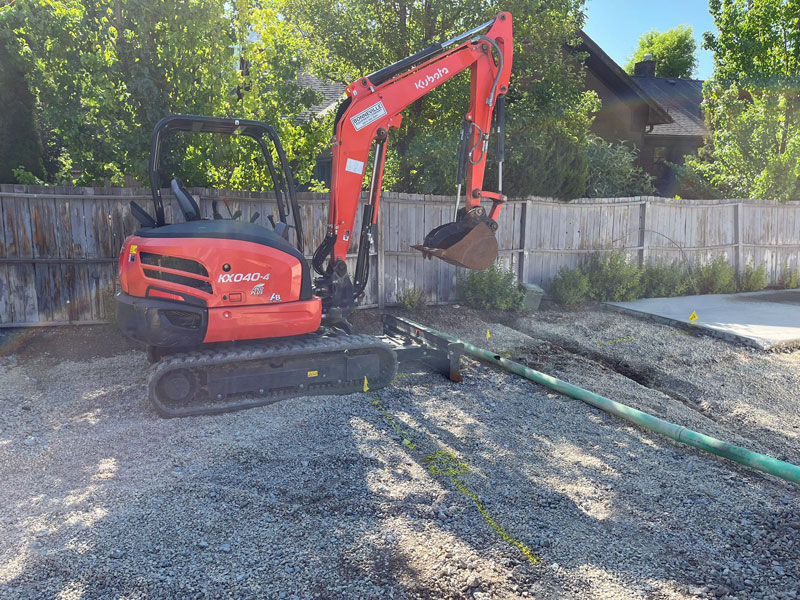
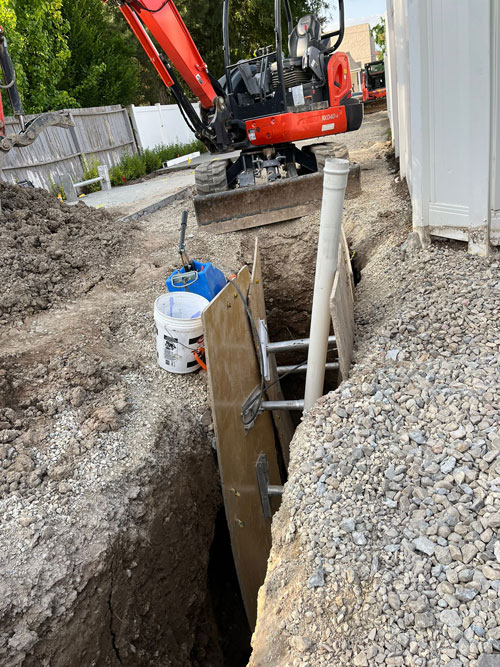
- Surgical Excavation: If a traditional dig is the only option, our pinpoint locating ensures we perform a minimal, surgical excavation instead of digging an unnecessary trench across your entire lawn.

Don't Let That Foul Sewer Smell Compromise Your Family's Health.
That foul, rotten-egg odor you smell in your basement, bathroom, or yard is not just an unpleasant nuisance—it’s a critical warning signal. That smell is sewer gas, and your plumbing system is specifically designed to be an airtight barrier to keep it safely outside your home. When you can smell it, it means that barrier has been breached. This gas is more than foul; it's a toxic mixture that can pose a direct risk to your family's health and comfort. At Let's Fix Plumbing, we treat sewer gas odors in Fairfield properties with the urgency they deserve, pinpointing the source of the breach and permanently sealing your system.
What Is Sewer Gas and Why Is It Dangerous?
Sewer gas isn't a single gas but a complex, variable mixture produced by decomposing wastewater and solid waste. This toxic mix often contains gases that are hazardous to your health.
- What You're Smelling: The most recognizable "rotten egg" smell is hydrogen sulfide, an irritant and chemical asphyxiant. The mix also contains ammonia (an irritant), methane (flammable and can displace oxygen), and carbon dioxide.
- The Health Risks: These gases are not meant to be inhaled. Chronic, low-level exposure to sewer gas can cause a range of symptoms, including persistent headaches, nausea, fatigue, dizziness, and irritation of the eyes and respiratory tract. At high concentrations, these gases can be extremely dangerous.
- The Fire Hazard: High concentrations of methane gas within the sewer gas mixture can be explosive, posing a significant fire risk in contained spaces like a basement.
How Is Sewer Gas Getting Inside? Common Causes of a System Breach
Your home’s plumbing uses vents and water-filled "P-traps" (the U-shaped pipe under every sink and drain) to block sewer gas. If you smell it, one of these barriers has failed.
- Dry P-Traps: This is the simplest cause. A floor drain in a basement or a sink in an unused guest bathroom can dry out, allowing gas to flow freely.
- Broken or Cracked Vent Pipes: Your home has a vent system (pipes that go to your roof) to equalize pressure. If one of these pipes cracks inside a wall, it can leak sewer gas directly into your home.
- A Failing Main Sewer Line: This is the most serious cause. A severe clog, root blockage, or break in your main sewer line creates immense back pressure, forcing toxic gases backward through your system and up through your drains, overpowering the water in your traps. A break outside your home will leak this gas directly into the soil, causing the odor in your yard.
Our Process: How We Find and Eliminate the Odor for Good
Don't live with the smell or the health risk. Our process is designed to scientifically locate the breach and provide a permanent solution.
- Full System Diagnostic: We start by assessing your home's entire drainage system. We check for simple fixes, like dry P-traps, while also assessing the main ventilation and drainage lines.
- Sewer Camera Inspection: To rule out (or confirm) the most serious cause, we deploy a high-definition camera into your main sewer line. This allows us to see the exact condition of the pipe and identify any major clogs, root blockages, or breaks that are causing the pressure backup and odor.
- Professional Smoke Testing: For persistent odors inside the home, we can perform a non-toxic smoke test. We pump a dense, harmless smoke into your sewer system from the outside. If there is a cracked vent pipe in a wall or a bad seal on a toilet, the smoke will escape, showing us the exact location of the leak.
- Sealing the System: Once the breach is identified, we provide the permanent solution. Whether it’s clearing a main line blockage with hydro-jetting or repairing a broken pipe with trenchless lining, we will restore the airtight integrity of your plumbing system, ensuring sewer gas—and its health risks—are locked out for good.

Why Choose Let's Fix Plumbing
- Locally Owned & Operated
- 24/7 Emergency Services
- Licensed & Uniformed Technicians
- 5-Star Google and Yelp Reviews
- Upfront Estimates
- Easy Online Appointments
Dealing with Aging, Corroded, or Bellied Pipes? Time for Modern Upgrades.
Your sewer line is an asset with a limited lifespan. The vast majority of homes in Fairfield built before the 1980s are still relying on pipes made of cast iron or clay tile. After 50, 60, or even 70 years of service, these materials are at the end of their functional life. They begin to corrode, crack, and shift, leading to recurring clogs, slow drains, and the constant threat of a backup. At Let's Fix Plumbing, we specialize in replacing these aging plumbing time bombs with "modern upgrades"—state-of-the-art solutions that provide another 50+ years of worry-free service, often without destroying your yard.
The Breakdown: What's Happening to Your Old Pipes
"Old age" isn't a single problem; it's a category of failures. Our camera inspections almost always find one of these three issues in aging pipes:
- Corroded Cast Iron: Cast iron was the standard for decades, but its enemy is rust. From the inside, constant moisture and waste cause corrosion and "scaling," where the pipe walls become rough and flake off. This scaling snags toilet paper and debris, causing constant clogs. From the outside, soil moisture eventually causes the pipe to rust completely through, leading to leaks, breaks, and collapse.
- Cracked & Root-Filled Clay: Vitrified clay pipe is strong but very brittle. It was installed in short, 2-to-3-foot sections connected by mortar. Over decades, shifting Utah soil causes these joints to separate or the pipe itself to crack. These tiny openings release water vapor, attracting tree roots, which then invade and completely choke the line.
- Bellied (Sagging) Pipes: This is a problem of physics, not just material. Over time, the soil bed beneath a pipe can erode or compact, causing a section of the pipe to sink. This creates a "belly" or "sag" that holds stagnant water and waste. No amount of drain snaking can fix this flow problem, guaranteeing recurring blockages until the grade is corrected.
The "Modern Upgrade": Your Trenchless Replacement Options
Instead of facing a destructive trench across your entire lawn, modern technology offers powerful, less-invasive solutions. After our camera inspection confirms the problem, we recommend the right upgrade.
- CIPP (Cured-In-Place-Pipe) Lining: This is the ideal upgrade for pipes that are corroded, cracked, or full of roots but still structurally intact. We use a "no-dig" approach to insert a flexible, resin-saturated liner into your old pipe. We then cure it solid, creating a brand new, seamless, structural pipe inside the old one. This new pipe is corrosion-proof, 100% sealed against roots, and rated for 50+ years.
- Pipe Bursting: This is the modern "replacement" upgrade. If the old pipe is too collapsed or damaged to be lined, we can use this trenchless method. We dig two small access points, pull a brand new, continuous HDPE (high-density polyethylene) pipe through the old pipe's path, and use a "bursting" head to shatter the old, failed pipe out of the way. This gives you a brand new, often larger-diameter pipe, without the massive trench.
- Surgical Excavation (For Bellies): The only correct modern upgrade for a bellied pipe is a targeted excavation. We use our camera locators to pinpoint the exact location of the sag, dig up only that section, rebuild a new, stable gravel base at the correct slope, and replace the failed segment. This permanently fixes the flow problem that lining would only cover up.

Contact Let's Fix Plumbing Today!
Let's Fix Plumbing is a fully licensed and insured plumbing business servicing the Fairfield, 84013 area. We offer a broad range of sewer line replacement services in Utah. Give us a call today at (801) 346-9896 to schedule service.