 Skip to content
Guesswork has no place in Harrisville, 84404 sewer management. At Let's Fix Plumbing, we utilize high-definition fiber-optic cameras and sonic tracing to pinpoint the exact source of your mainline distress without unnecessary excavation. Whether you're dealing with root intrusion or a shifted joint, we provide a clear, visual diagnosis before any work begins, ensuring a targeted and efficient repair.
If you’re facing recurring backups in Harrisville, it’s time to see what’s actually happening underground. Let the specialists at Let's Fix Plumbing provide the clarity you need. Book your high-tech sewer inspection online today.
Protect Your Foundation: Why a Small Sewer Leak Is a Major Structural Threat
Your home’s foundation is its most critical asset, and one of its greatest silent enemies is a leaking sewer line. A cracked or separated sewer pipe doesn't just waste water or create a bad smell; it actively undermines the structural integrity of your entire property by releasing a steady flow of water directly into the soil that supports your foundation. This is not just a plumbing problem; it's a direct threat to your home's stability. At Let's Fix Plumbing, we help homeowners across Harrisville, 84404 diagnose and stop these leaks before they lead to catastrophic and expensive structural failure.
How a Broken Sewer Pipe Destroys Foundations
This destructive process happens slowly, silently, and directly beneath your feet. Any sewer pipe that runs under or near your home’s slab or footings becomes a liability the moment it’s breached.
- Soil Oversaturation: A leaking pipe constantly saturates the compacted soil around your foundation. Soil that is supposed to be stable and supportive turns into unstable, muddy slurry.
- Erosion and Soil Washout: The constant flow of water—even from a small crack—begins to slowly wash away the fine particles of soil (like sand and silt) that provide the structural support for the concrete.
- Void Creation: Over time, this erosion creates an empty space, or "void," directly beneath your concrete slab or foundation footing. The foundation is now spanning over hollow ground, bearing the entire weight of your house without support from below.
- Settling, Shifting, and Cracking: Gravity always wins. The immense weight of the house forces the unsupported section of the foundation to sink, settle, or shift into the void. This movement is what causes diagonal cracks in your basement walls, uneven floors, sticking doors and windows, and cracked drywall seams inside your home.
Our Solution: Secure Your Line, Save Your Foundation
By the time you see cracks in your drywall, the damage to your foundation is already significant. The key is to address the cause (the sewer leak) the moment it's suspected. If you have recurring clogs, foul odors, or soggy spots near your home, you must investigate the sewer line immediately.
- Advanced Camera Diagnosis: We don’t guess. We send a high-definition sewer camera through your plumbing to visually inspect the critical area where the pipe runs under or exits your foundation. We can see the exact crack, offset joint, or root intrusion that is causing the leak.
- Pinpoint the Breach: Our camera equipment allows us to pinpoint the exact location and depth of the failure, so we know precisely where the erosion is occurring.
- Trenchless "No-Dig" Repair: The last thing you want near a vulnerable foundation is a massive, disruptive excavation. Our modern, trenchless CIPP (Cured-In-Place-Pipe) lining process is the perfect solution. We can insert a new structural liner into the old pipe and cure it in place, sealing the leak permanently from the inside.
- Stop the Damage, Permanently: This "no-dig" repair requires no destructive trenching next to your home. It immediately stops the leak, preventing any further soil erosion and allowing the ground around your foundation to stabilize. This single plumbing repair can save you tens of thousands of dollars in future foundation leveling and structural concrete work.
Upgrading from Cast Iron: Why Modern Materials Matter
The Problem with Internal Corrosion and "Scaling"
For decades, cast iron was the gold standard for sewer lines, but it has a significant flaw: it rusts from the inside out. This process, known as tuberculation, creates a jagged, sandpaper-like surface that catches waste and hair. Over time, the bottom of the pipe can even rot away completely, leaving a "trench" in the soil where sewage sits. Upgrading to modern materials eliminates these rough surfaces, ensuring that waste moves swiftly and efficiently away from your home.
The Benefits of Modern PVC and HDPE
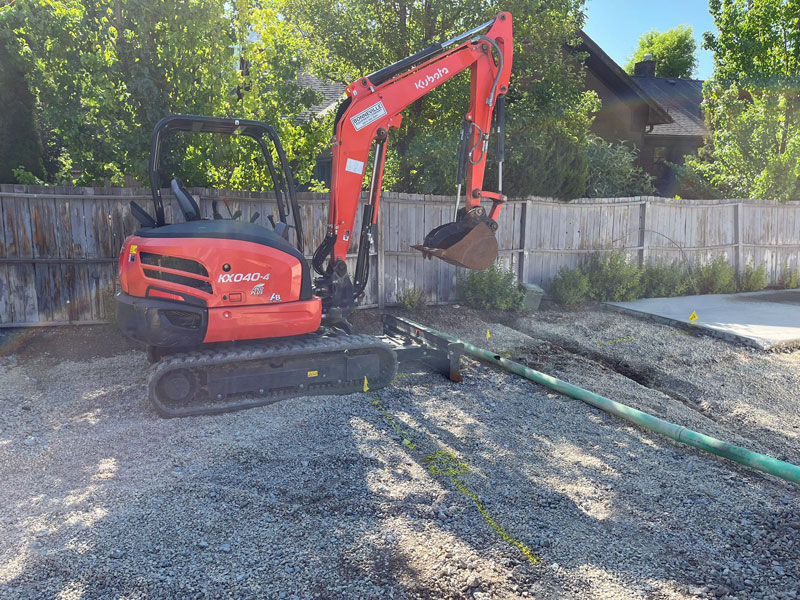
When we replace an old cast iron line, we typically use Schedule 40 PVC or High-Density Polyethylene (HDPE). These materials are completely impervious to rust and chemical corrosion. Furthermore, HDPE is joined using "heat fusion," creating a single, seamless pipe that is virtually impossible for tree roots to penetrate. These modern upgrades offer a 50-to-100-year lifespan, providing you with a "set it and forget it" solution that significantly increases your home’s resale value.
Why Professional Installation is Non-Negotiable
Switching materials isn't as simple as swapping one pipe for another; it requires specialized transition couplings and a deep understanding of thermal expansion. If a PVC line is incorrectly connected to an existing cast iron stack, it can lead to leaks at the most critical junction of your home. Our team specializes in these "hybrid" transitions, ensuring that your new, high-tech sewer line is perfectly integrated with your home’s existing plumbing for maximum durability.
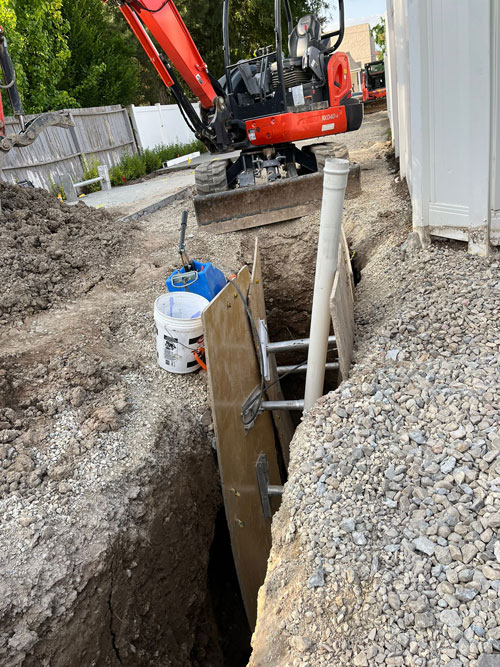
Why Choose Let's Fix Plumbing
- Locally Owned & Operated
- 24/7 Emergency Services
- Licensed & Uniformed Technicians
- 5-Star Google and Yelp Reviews
- Upfront Estimates
- Easy Online Appointments
Why That Rented Auger Can Make Your Sewer Problem Drastically Worse.
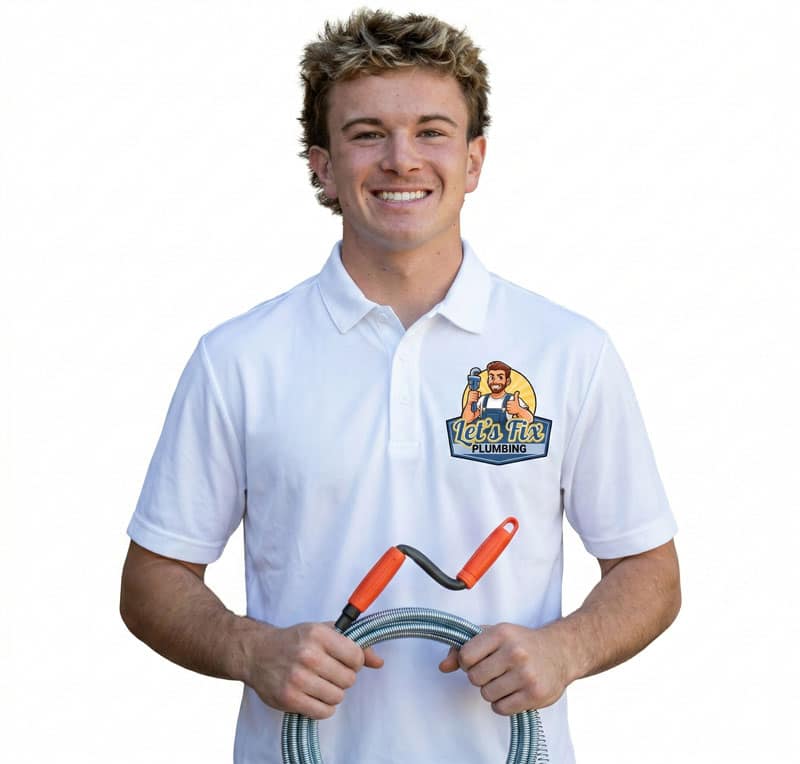
When chemical drain cleaners fail, the next logical step for a determined homeowner is to rent a powerful, commercial-grade auger or drain snake. This "can-do" attitude is admirable, but when applied to a main sewer line, it's an incredibly high-stakes gamble. Operating a powerful, rotating steel cable 100 feet into a pipe you cannot see is one of the fastest ways to turn a simple repair into a multi-thousand-dollar catastrophe. At Let's Fix Plumbing, we’ve seen the disastrous results of DIY snaking across Harrisville and strongly advise homeowners to leave this job to trained professionals who have the right diagnostic tools.
Working Blind: The Top 4 Risks of a Rented Auger
Without a sewer camera, you are operating a heavy-duty cutting tool completely blind. The damage this can cause far outweighs any potential savings.
- You're Treating a Symptom, Not the Disease: Best-case scenario? You punch a 3-inch hole through a massive ball of tree roots. Water flows for a little while, and you return the machine feeling successful. But the roots are still there, the crack they came through is still open, and the backup will return, often in just a few weeks. You've simply "poked the bear," not solved the problem.
- You Can Destroy the Pipe: This is the most catastrophic risk. An aggressive cutting head on a powerful machine does not differentiate between a tree root and a fragile pipe wall. If your old home has brittle clay pipe, the auger can shatter it. If you have corroding cast iron, the cutter can break off a large chunk and cause a total collapse. If you have Orangeburg pipe, the auger will simply shred it to pieces. You will have personally turned a repairable pipe (that could have been lined) into a destroyed pipe that now requires a full, expensive excavation.
- You Can Get the Cable Stuck or Broken: Rental augers are used by hundreds of people. Their cables are often fatigued and kinked. It is extremely common to get the cable stuck in a root mass or snagged on a separated pipe joint. When you can't pull it back, you now have two problems: your original clog, and 75 feet of steel cable and a cutting head permanently stuck in your sewer, making the professional repair exponentially more difficult and costly.
- It Provides Zero Diagnostic Value: Even if you succeed in clearing some of the clog, you are still blind. You have learned nothing. What caused the clog? Is the pipe cracked and leaking into your foundation? Is the pipe bellied and guaranteed to clog again? You’ve simply closed your eyes, hit the "on" switch, and hoped for the best.
The Professional Process: Camera-Assisted Clearing
We never operate blind. Our process is built on safety and data, protecting your property from the risks of guesswork.
- Camera Inspection First: The first tool we ever put in your sewer line is a high-definition camera. We identify the pipe material (clay, cast iron, PVC), the exact nature of the blockage (roots, collapse, grease), and the pipe's overall structural integrity.
- The Right Tool for the Job: Once we see the problem, we select the correct equipment. For most blockages like roots and sludge, our high-pressure hydro-jetter is far safer and infinitely more effective, scouring the entire pipe wall clean instead of just poking a hole. If an auger is needed, we use the correct, professional-grade head for that specific pipe type and problem.
- Final Verification: After clearing the blockage, we run the camera through the line a second time. This proves to you that the blockage is 100% gone and allows us to get a clear look at the underlying cause (the crack the roots used).
- A Permanent Solution: Now that the clog is gone and we've diagnosed the disease, we can offer you a permanent solution, like trenchless pipe lining, to seal that crack and ensure this problem never happens again.
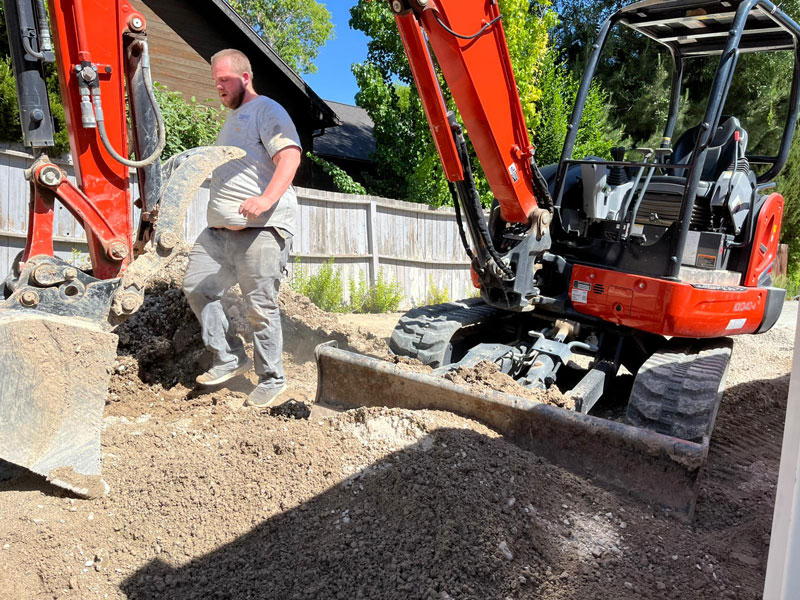
Contact Let's Fix Plumbing Today!
Let's Fix Plumbing is a fully licensed and insured plumbing business servicing the Harrisville area. We offer a broad range of sewer line replacement services in Utah. Give us a call today at (801) 346-9896 to schedule service.