 Skip to content

Guesswork has no place in Palmyra sewer management. At Let's Fix Plumbing, we utilize high-definition fiber-optic cameras and sonic tracing to pinpoint the exact source of your mainline distress without unnecessary excavation. Whether you're dealing with root intrusion or a shifted joint, we provide a clear, visual diagnosis before any work begins, ensuring a targeted and efficient repair.
If you’re facing recurring backups in Palmyra, it’s time to see what’s actually happening underground. Let the specialists at Let's Fix Plumbing provide the clarity you need. Book your high-tech sewer inspection online today.

Seeing Soggy Patches or Foul Odors in Your Yard? Let's Investigate.
Sometimes, the most serious plumbing warnings aren't inside your house at all. If you've noticed areas of your lawn that are constantly wet and soggy, or you detect an unmistakable foul sewage odor outdoors, your plumbing is signaling a critical failure. These are telltale signs that your main sewer line has broken, cracked, or separated underground, and is leaking raw sewage directly into your soil. This is a serious health hazard that can damage your landscaping and foundation. At Let's Fix Plumbing, we are the Palmyra, 84660 experts in underground diagnostics to pinpoint and permanently fix these hazardous leaks.
Telltale Signs of an Underground Sewer Leak
A broken sewer line will contaminate the soil around your property long before it ever causes a backup in your home. The waste has to go somewhere, and if the pipe is breached, it’s seeping into your yard. Here’s exactly what to look for:
- Soggy, Marshy Ground: Areas of your lawn that stay wet and saturated even during dry weather are a primary indicator that water is constantly leaking from a pipe below.
- Strong, Foul Odors: The smell of raw sewage in your yard is an undeniable sign of a sewer line break. This is waste that is escaping the pipe instead of making it to the city sewer.
- Unusually Lush, Green Patches: Before an area becomes a saturated, soggy mess, the leaking "fertilizer" (nutrient-rich wastewater) will often cause one patch of grass to grow significantly greener and faster than the surrounding lawn.
- Ground Indentations or Sinkholes: As the leaking water erodes the soil that supports the sewer pipe, the ground can begin to sink. This can create a noticeable dip or "belly" in your lawn directly above the break.
- Pest Problems: A sudden infestation of rodents or insects in one area of your yard can be a sign they are attracted to the moisture and waste from a compromised sewer line.
Our Investigation and Repair Process
When the symptoms are outside, we must investigate from the inside. Digging randomly is the worst-case scenario. Our process uses advanced technology to find the exact point of failure without destroying your property.
- High-Definition Camera Inspection: This is the essential first step. We access your sewer from a cleanout port and feed a flexible, high-resolution camera through the entire length of the pipe. This allows us to see the exact crack, collapse, or root intrusion on a video monitor in real-time.
- Electronic Signal Location: Our sewer camera heads are equipped with powerful transmitters (sondes). When we locate the break on our video screen, we can use a specialized receiver above ground to electronically pinpoint the exact physical spot and depth of the damage—often accurate to within inches.
- Presenting Your Repair Options: With the problem precisely located, we can offer the most efficient and least invasive solution.
- Trenchless Pipe Lining (CIPP): In many cases, we can repair the pipe from the inside without excavation by inserting a new, seamless liner that seals the leak and restores the pipe to better-than-new condition.
- Trenchless Spot Repair: If the break is localized, we can often perform a targeted "spot repair" that addresses only the broken section, preserving the rest of your pipe and your yard.
- Surgical Excavation: If a traditional dig is the only option, our pinpoint locating ensures we perform a minimal, surgical excavation instead of digging an unnecessary trench across your entire lawn.
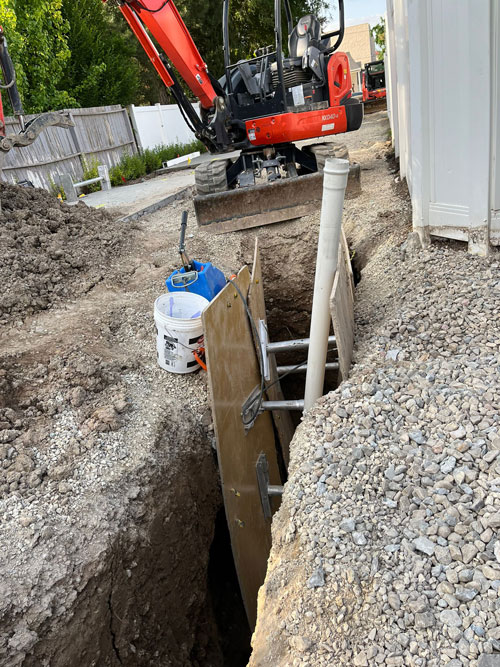
The Lifecycle of a Sewer Pipe: When to Call the Pros
Understanding Material Longevity
Every sewer pipe has an expiration date determined by its composition. Old-fashioned clay pipes can last 50 to 60 years but are highly susceptible to joint failure and root intrusion. Cast iron is durable but prone to internal corrosion after 40 years, while Orangeburg (tar-paper) pipes rarely last beyond 30 years without collapsing. Knowing the age of your home is the first step in predicting when your underground infrastructure will require professional intervention.
Environmental Stress and Pipe Aging
The lifecycle of your pipe isn't just about age; it’s about the environment. Soil acidity, heavy vehicle traffic over the line, and aggressive local tree species can shave decades off a pipe's life. If you are living in an older property, the system is likely operating on "borrowed time." A proactive professional assessment can identify if your pipes are reaching their limit before a catastrophic burst occurs, allowing you to plan for a replacement on your own terms.
The Value of "End-of-Life" Inspections
When a pipe reaches the end of its functional lifecycle, it becomes brittle. Standard cleaning methods that worked for years can suddenly cause a fragile pipe to shatter. We provide "lifecycle inspections" that evaluate the wall thickness and joint integrity of your sewer main. By hiring a professional to assess the remaining life of your pipes, you avoid the shock of an emergency failure and can transition to modern, lifetime-rated materials like PVC or HDPE seamlessly.
Why Choose Let's Fix Plumbing
- Locally Owned & Operated
- 24/7 Emergency Services
- Licensed & Uniformed Technicians
- 5-Star Google and Yelp Reviews
- Upfront Estimates
- Easy Online Appointments
3 Things Every New Homebuyer Should Know About the Sewer Line
1. The Standard Home Inspection Doesn't Cover It
Most homebuyers assume that a general home inspection includes the sewer line, but this is a dangerous misconception. A standard inspector only checks if the toilets flush; they do not look at the condition of the buried pipes. Before you sign the closing papers, you should always insist on a Sewer Scope. This small investment can reveal thousands of dollars in hidden damage—like root intrusions or "bellied" pipes—before you inherit the problem.
2. "Age of Home" is the Best Predictor of Failure
If you are buying a "charming" historic home, you are likely buying a clay or cast-iron sewer line that is at or beyond its life expectancy. Even if the drains seem to work during the walkthrough, the "surge" of a new family moving in can cause a weakened system to fail immediately. Understanding the material of the sewer line is just as important as knowing the age of the roof or the HVAC system.
3. You Have Leverage Before the Sale
If a sewer scope reveals issues, you can negotiate with the seller to have the line repaired or replaced before you move in. Alternatively, you can ask for a "closing credit" to cover the cost of the work. Once you take the keys, the sewer line is 100% your financial responsibility. Hiring a professional to perform a pre-purchase inspection is the smartest move you can make to protect your new investment.
Contact Let's Fix Plumbing Today!
Let's Fix Plumbing is a fully licensed and insured plumbing business servicing the Palmyra area. We offer a broad range of sewer line replacement services in Utah. Give us a call today at (801) 346-9896 to schedule service.