 Skip to content
Beneath your Plain City property lies a critical component of your plumbing: the main sewer line. When this line fails, it threatens your home or business with significant damage and disruption. Let's Fix Plumbing provides expert sewer line repair and replacement across Plain City, diagnosing complex underground issues and delivering reliable, lasting solutions.
If you suspect sewer trouble in Plain City, trust the specialists at Let's Fix Plumbing. Contact us online today to learn more or to schedule an inspection.

Decoding Foul Odors: Is It a Clog or a Broken Sewer Pipe?
Identifying the Source of Sewer Gas
Persistent odors in or around your property are more than a nuisance; they are a warning. If the smell is localized to one sink, it may be a "dry trap" or a simple organic clog. However, if the smell of "rotten eggs" (hydrogen sulfide) is pervasive throughout the home or strongest in the yard, it usually indicates a breach in the sewer line. A broken pipe allows sewer gases to escape the "closed loop" of your plumbing and permeate your living space or soil.
The Difference Between Methane and Bio-Sludge Smells
Differentiating between the smell of decaying food in a drain and true sewer gas is key to determining your repair strategy. Sewer gas is often accompanied by a "damp" or "musty" smell, indicating that sewage is leaking into the ground beneath your home. This moisture can also trigger mold growth behind walls, adding a different layer of odor. If the smell worsens when you run water, it’s a strong indicator that the pipe is cracked and releasing gases under pressure.
How Professional Smoke Testing Finds the Leak
When a visual inspection isn't enough, we use "smoke testing" to find the exact location of a break. By pumping non-toxic artificial smoke into the sewer system, we can see exactly where it escapes—whether it's a cracked vent pipe in the attic or a broken main line under the driveway. This diagnostic precision allows us to target the repair exactly where it’s needed, preventing you from paying for unnecessary "guesswork" and ensuring your home’s air quality is restored.
When to Stop Cleaning and Start Replacing Your Sewer Line
Breaking the Cycle of Temporary Fixes
If you are calling a plumber once or twice a year to "snake out" your main line, you are spending money on a symptom rather than the cure. While cleaning provides temporary relief, it does nothing to fix a shifted joint, a cracked wall, or a heavy root infestation. Eventually, the cost of repeated "emergency" cleanings will exceed the cost of a permanent repair. Recognizing when you’ve reached the "point of diminishing returns" is key to protecting your finances.
The Damage Caused by Frequent Snaking
Standard mechanical snaking is an aggressive process. If your pipe is already weakened by age or corrosion, the repeated impact of a steel cable can actually accelerate the failure of the pipe walls. If we find that we are pulling back "dirt" or "rocks" during a cleaning, it’s a definitive sign that the pipe has breached and cleaning is no longer a viable option. At this stage, continued cleaning is a liability, not a solution.
Making the Shift to Permanent Restoration
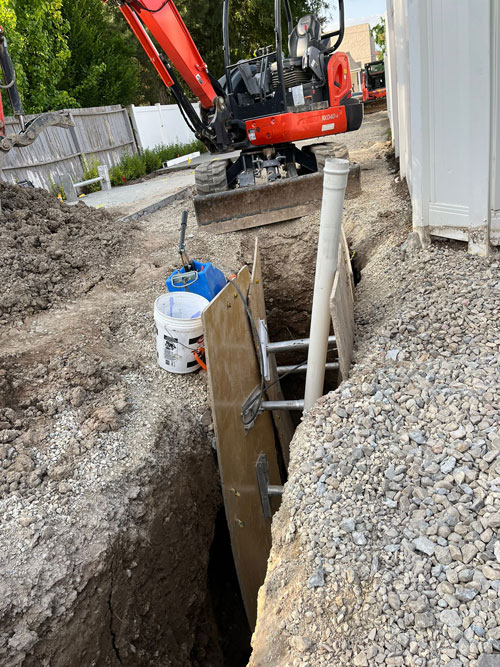
A professional sewer replacement ends the cycle of stress and water damage. We provide a transparent comparison between the ongoing costs of maintenance and the one-time investment of a replacement. With modern trenchless options, we can often replace the line in a single day, giving you back your peace of mind and a functional drainage system that won't require another thought for decades.
Why Choose Let's Fix Plumbing
- Locally Owned & Operated
- 24/7 Emergency Services
- Licensed & Uniformed Technicians
- 5-Star Google and Yelp Reviews
- Upfront Estimates
- Easy Online Appointments
Don't Turn a Simple Repair into a Replacement: The True Cost of DIY Mistakes
When a main sewer line clogs, many homeowners in Plain City jump into action, hoping to save money on what they believe is a simple clog. This logic is the single most common reason a simple "repair" job turns into a catastrophic, full-yard "replacement." The true cost of a DIY mistake isn't the rental fee for an auger; it's the $15,000+ difference in cost after that auger destroys your pipe, making all the affordable, simple repair options impossible. At Let's Fix Plumbing, our professional process is designed to protect your options and save your pipe, not just clear it.
The Tipping Point: How a "Repairable" Pipe Becomes "Destroyed"
Understanding the difference between a repair and a replacement is key. A "repair" (like trenchless lining) is an affordable solution that uses your existing pipe. A "replacement" (like excavation) is a total, destructive, and far more expensive operation. A DIY mistake is often the event that makes the cheap option impossible.
- Scenario 1: The "Repairable" Pipe (Before DIY) Your 50-year-old clay pipe is cracked and filled with tree roots. It backs up constantly. However, the pipe is still intact and round. This pipe is a perfect candidate for a simple repair: we can use a hydro-jetter to clean it and then install a "no-dig" trenchless CIPP liner. This creates a new pipe inside the old one. This solution is fast, requires no excavation, and is a moderate, predictable cost.
- Scenario 2: The "Replacement" Pipe (After DIY) You rent a powerful auger to "save money." You run that aggressive steel cutting head blindly into the same 50-year-old brittle clay pipe. The cutter snags a crack and the force shatters the pipe, causing a 5-foot section to collapse into rubble.
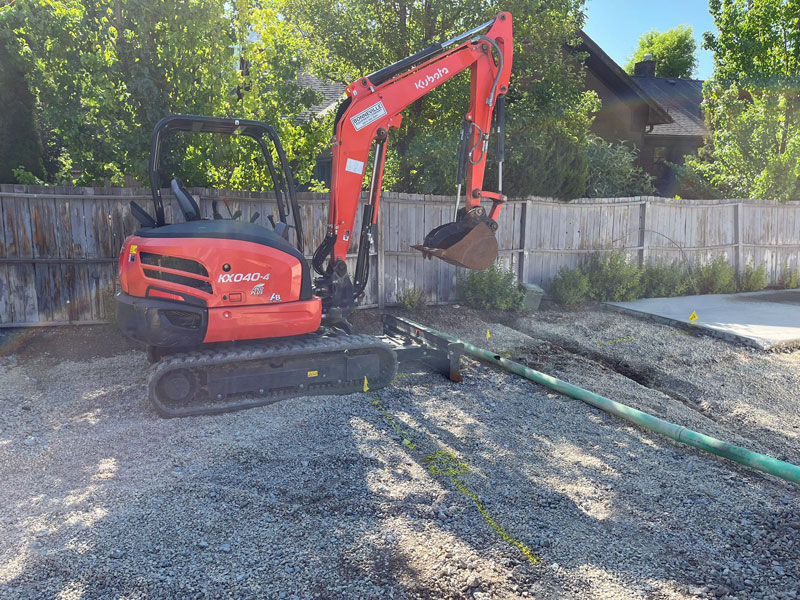
- The Devastating Consequence: Your pipe is now "destroyed." It is no longer a candidate for the affordable trenchless liner—you cannot install a liner inside a pile of crushed clay. Your DIY attempt has just personally eliminated the simple repair option. The only solution left is a full, catastrophic replacement, which requires us to bring in an excavator, dig a massive trench across your yard, and manually replace the entire line. You just turned a simple repair into a $20,000 nightmare.
Our Process: Protecting Your Repair Options
Our entire professional method is built around one philosophy: diagnose first to protect the pipe. By avoiding blind guesswork, we preserve your most affordable solutions.
- Camera-First Diagnosis: We NEVER use a cutting tool blindly. Our camera inspection immediately tells us the material (clay, cast iron, etc.) and its condition. If we see a pipe is brittle, we know an aggressive auger is the wrong tool and would cause a collapse.
- Hydro-Jetting (The Safe Cleaner): Instead of a destructive auger that can shatter pipes, our high-pressure hydro-jetting safely scours roots and sludge from the pipe walls. This clears the clog without compromising the pipe's structural integrity.
- Preserving the "Simple Repair": By diagnosing correctly and cleaning safely, we keep the pipe intact, preserving your ability to choose the "simple repair." We can now offer you the affordable, permanent trenchless CIPP lining solution—the very repair you wanted from the start. Don't let a $200 rental fee cost you thousands; call the pros who know how to protect your options.
Contact Let's Fix Plumbing Today!
Let's Fix Plumbing is a fully licensed and insured plumbing business servicing the Plain City area. We offer a broad range of sewer line replacement services in Utah. Give us a call today at (801) 346-9896 to schedule service.