 Skip to content
In the Springville real estate market, a certified, high-functioning sewer line is a premium asset. Whether you’re preparing to sell or simply protecting your equity, Let's Fix Plumbing provides the documentation and high-quality workmanship that proves your property’s infrastructure is in peak condition. We remove the "financial mystery" of underground pipes by delivering transparent, long-term sewer solutions.
Secure the value of your Springville home with a professional sewer audit. Let's Fix Plumbing offers the peace of mind that comes with a verified, reliable drainage system. Get your fast quote or book a professional consultation through our website today.

Seeing Soggy Patches or Foul Odors in Your Yard? Let's Investigate.
Sometimes, the most serious plumbing warnings aren't inside your house at all. If you've noticed areas of your lawn that are constantly wet and soggy, or you detect an unmistakable foul sewage odor outdoors, your plumbing is signaling a critical failure. These are telltale signs that your main sewer line has broken, cracked, or separated underground, and is leaking raw sewage directly into your soil. This is a serious health hazard that can damage your landscaping and foundation. At Let's Fix Plumbing, we are the Springville experts in underground diagnostics to pinpoint and permanently fix these hazardous leaks.
Telltale Signs of an Underground Sewer Leak
A broken sewer line will contaminate the soil around your property long before it ever causes a backup in your home. The waste has to go somewhere, and if the pipe is breached, it’s seeping into your yard. Here’s exactly what to look for:
- Soggy, Marshy Ground: Areas of your lawn that stay wet and saturated even during dry weather are a primary indicator that water is constantly leaking from a pipe below.
- Strong, Foul Odors: The smell of raw sewage in your yard is an undeniable sign of a sewer line break. This is waste that is escaping the pipe instead of making it to the city sewer.
- Unusually Lush, Green Patches: Before an area becomes a saturated, soggy mess, the leaking "fertilizer" (nutrient-rich wastewater) will often cause one patch of grass to grow significantly greener and faster than the surrounding lawn.
- Ground Indentations or Sinkholes: As the leaking water erodes the soil that supports the sewer pipe, the ground can begin to sink. This can create a noticeable dip or "belly" in your lawn directly above the break.
- Pest Problems: A sudden infestation of rodents or insects in one area of your yard can be a sign they are attracted to the moisture and waste from a compromised sewer line.
Our Investigation and Repair Process
When the symptoms are outside, we must investigate from the inside. Digging randomly is the worst-case scenario. Our process uses advanced technology to find the exact point of failure without destroying your property.
- High-Definition Camera Inspection: This is the essential first step. We access your sewer from a cleanout port and feed a flexible, high-resolution camera through the entire length of the pipe. This allows us to see the exact crack, collapse, or root intrusion on a video monitor in real-time.
- Electronic Signal Location: Our sewer camera heads are equipped with powerful transmitters (sondes). When we locate the break on our video screen, we can use a specialized receiver above ground to electronically pinpoint the exact physical spot and depth of the damage—often accurate to within inches.
- Presenting Your Repair Options: With the problem precisely located, we can offer the most efficient and least invasive solution.
- Trenchless Pipe Lining (CIPP): In many cases, we can repair the pipe from the inside without excavation by inserting a new, seamless liner that seals the leak and restores the pipe to better-than-new condition.
- Trenchless Spot Repair: If the break is localized, we can often perform a targeted "spot repair" that addresses only the broken section, preserving the rest of your pipe and your yard.
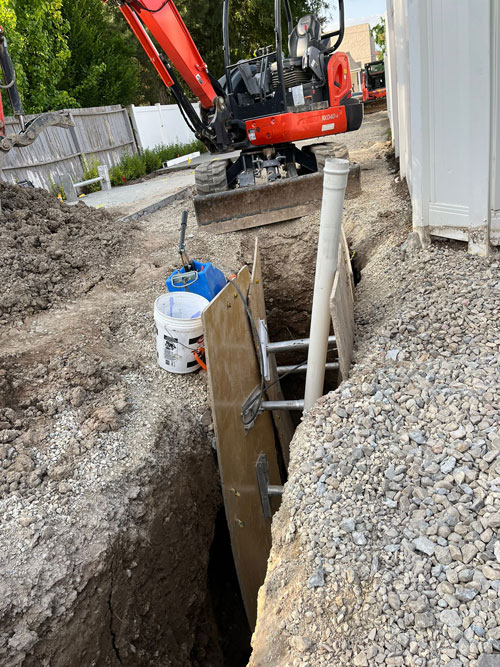
- Surgical Excavation: If a traditional dig is the only option, our pinpoint locating ensures we perform a minimal, surgical excavation instead of digging an unnecessary trench across your entire lawn.
Identifying the Warning Signs of a Broken Sewer Main
A broken sewer main rarely fails without warning. It almost always sends distress signals first, but these signs are often mistaken for minor, unrelated plumbing issues. Knowing how to "connect the dots" between these symptoms is the key to preventing a catastrophic sewage backup and tens of thousands of dollars in property damage. At Let's Fix Plumbing, we help property owners across Springville understand these critical warnings and intervene before a small problem becomes an emergency.
If you notice any of the following, your sewer main is likely compromised.
Indoor Warning Signs: What to Look for Inside Your Home
The earliest signs of a main line problem often appear inside your house, specifically at the lowest drainage points.
- Multiple Slow Drains: This is the number one sign. One slow tub is a hair clog. But when your toilet, your shower, and your bathroom sink are all draining slowly, the problem isn’t with the individual fixtures. The blockage is in the single main pipe they all drain into.
- Water Backups in Unusual Places: This is a critical red flag. Does flushing an upstairs toilet cause water to bubble up into your basement shower drain? Does your washing machine draining make your first-floor toilet gurgle and overflow? This means the wastewater has nowhere to go and is being forced back into your home through the lowest exit point.
- Loud Gurgling Sounds: Your plumbing should drain quietly. Loud, persistent gurgling sounds from your toilets or floor drains are a sign of trapped air. This happens when water struggles to get past a major blockage, forcing air violently back up through your plumbing's water traps.
- Persistent Sewer Gas Odors: You should never smell raw sewage inside your home. If you notice persistent foul odors (especially from basement drains or bathrooms), it means gases from the blocked sewer are being pushed back into your living space.
Outdoor Warning Signs: What to Spot in Your Yard
When the pipe isn't just clogged but is physically broken, cracked, or separated, the evidence will eventually appear on your property.
- Soggy Patches or Sinkholes: Have you noticed a persistent mushy spot in your lawn that never seems to dry, even when it hasn't rained? Or a new dip, indentation, or "sinkhole" in your yard? This is a direct sign that the pipe below is leaking, eroding the soil, and causing the ground to collapse.
- Unusually Lush Patches of Grass: If one specific patch of your lawn is suddenly incredibly green and growing much faster than the rest, it is likely being fertilized by a constant, nutrient-rich leak from the sewer line directly beneath it.
- Foul Odors Outdoors: If you can smell raw sewage anywhere in your yard, it is an undeniable sign that wastewater is escaping the pipe before it reaches the street.
What to Do If You Spot These Signs
If any of these warning signs sound familiar, do not wait. A gurgling toilet today will become a basement flooded with sewage tomorrow. Do not waste money on chemical drain cleaners, as they cannot fix a broken pipe, a sagging line, or a massive root intrusion.
The next and only step is a professional diagnosis.
- Call the Experts: Contact Let's Fix Plumbing. Describe the symptoms you're seeing (both indoors and outdoors).
- Schedule a Sewer Camera Inspection: This is the only way to know the truth. We will feed a high-definition, flexible camera into your sewer line to visually identify the exact problem. We'll show you the footage so you can see the roots, cracks, or collapse for yourself.
- Get a Permanent Solution: Once we have video evidence, we will provide clear, upfront options for a long-term solution, ranging from high-pressure hydro-jetting to permanent trenchless pipe repair.
Why Choose Let's Fix Plumbing
- Locally Owned & Operated
- 24/7 Emergency Services
- Licensed & Uniformed Technicians
- 5-Star Google and Yelp Reviews
- Upfront Estimates
- Easy Online Appointments
Risking Your Pipes: How DIY Attempts Can Lead to Catastrophic Failure and Flooding.
When your main sewer line is clogged, the situation is stressful, and the temptation to save money with a do-it-yourself solution is powerful. But your main sewer line is not the place to experiment. This complex system, buried yards underground and made of aging materials, is extremely vulnerable. DIY attempts, from harsh chemicals to rented power tools, are a blind gamble that can—and often does—go horribly wrong, turning a simple blockage into a catastrophic pipe failure and a devastating sewage flood. Before you risk your property, let the experts at Let's Fix Plumbing explain the dangers we see across Springville every week.
The DIY Gamble: A Recipe for Disaster
Amateur tools and guesswork are the direct cause of many of the worst sewer emergencies we respond to. Here is how DIY attempts lead to failure:
- The Chemical Mistake (Creating a Toxic Flood): When you pour liquid drain cleaner down a fully blocked main line, it doesn't reach the clog (which is often 80+ feet away and made of roots). Instead, it mixes with the backed-up sewage. When the blockage inevitably fails to dissolve, that toxic, caustic "black water" has nowhere to go but back up into your home, creating a hazardous biohazard spill that requires professional remediation.
- The Rental Auger Mistake (Causing the Collapse): This is the single fastest way to cause a "catastrophic failure." You are operating a powerful, rotating steel cutter completely blind inside a 50+ year-old pipe. That brittle clay or corroded cast iron cannot withstand the force. The auger head will shatter the brittle pipe, get snagged on a separated joint, or shred aging Orangeburg pipe. You will have personally caused the pipe to collapse, turning what could have been a trenchless repair into a mandatory, property-destroying full excavation.
- The Pressure Washer Mistake (Forcing a Flood): A consumer pressure washer with a "jetter" kit is not a professional hydro-jetter. It lacks the pressure to cut roots and, more importantly, has no water recovery. When it hits a total blockage, all that water has nowhere to go but backward, up the pipe, and directly out of your floor drains and toilets, causing the very sewage flood you were trying to prevent.
Why "Professional Diagnosis" Isn't Just a Sales Pitch
Our professional process is the opposite of the DIY gamble. It is designed to eliminate risk at every step by removing the single most dangerous element: the guesswork.
- Step 1: Accurate Diagnosis (The Camera): We never use a tool blindly. Our process begins by feeding a high-definition sewer camera into your line. This is the only way to safely identify the pipe material (clay, cast iron, PVC), the exact nature of the problem (roots, collapse, grease, or belly), and the structural integrity of the pipe. This one step prevents every single DIY disaster.
- Step 2: The Correct Tool for the Job: Once we see the problem on video, we deploy the right solution. Unlike a rental auger, our professional high-pressure hydro-jetter is powerful enough to slice roots clean and scour pipe walls of sludge, and our technicians are trained to use it safely without damaging your pipes.
- Step 3: The Permanent Solution (Lining): Poking a hole with an auger is a temporary fix at best. After we clear your line, our camera allows us to offer the permanent fix: Trenchless Pipe Lining. We can create a new, structural, seamless pipe inside your old one, sealing all the cracks and making it impenetrable to roots. This ends the threat of future failures and flooding for good—a peace of mind DIY attempts can never provide.
Contact Let's Fix Plumbing Today!
Let's Fix Plumbing is a fully licensed and insured plumbing business servicing the Springville area. We offer a broad range of sewer line replacement services in Utah. Give us a call today at (801) 346-9896 to schedule service.