 Skip to content
Guesswork has no place in West Mountain sewer management. At Let's Fix Plumbing, we utilize high-definition fiber-optic cameras and sonic tracing to pinpoint the exact source of your mainline distress without unnecessary excavation. Whether you're dealing with root intrusion or a shifted joint, we provide a clear, visual diagnosis before any work begins, ensuring a targeted and efficient repair.
If you’re facing recurring backups in West Mountain, 84651, it’s time to see what’s actually happening underground. Let the specialists at Let's Fix Plumbing provide the clarity you need. Book your high-tech sewer inspection online today.
Are Aggressive Tree Roots Strangling Your Sewer Pipes? We Have the Solution.
The mature trees that add beauty and value to your West Mountain, 84651 property hide a hidden threat: their root systems. Tree root intrusion is, without question, the single most common cause of catastrophic main sewer line failure. These roots are naturally drawn to the water and nutrients inside your pipes, and they are powerful enough to break in and completely take over. At Let's Fix Plumbing, we specialize in not just clearing tree roots, but providing permanent, long-term solutions to stop them from ever coming back.
Why Your Sewer Pipe is a Magnet for Tree Roots
It’s a natural process that, unfortunately, can destroy your plumbing. Your sewer line is a perfect target for any nearby tree, and roots can sense it from yards away.
- Vapor Detection: Your sewer pipes (especially older ones with joints) release tiny, invisible plumes of warm water vapor into the cooler soil. Tree roots are biologically programmed to seek water and will follow this vapor trail directly back to its source.
- Nutrient-Rich Target: Once a root finds a tiny crack, joint, or opening, it taps into a constant source of water and rich nutrients. This causes the root to "explode" in growth inside the pipe.
- The "Net" Effect: As roots grow, they form a thick "web" or "ball" inside the pipe. This root mass acts like a net, catching toilet paper, grease, and solid waste until the entire line is choked off, leading to recurring backups.
- Pipe Destruction: This isn't just a clog; it's a structural attack. As the roots expand, they exert thousands of pounds of pressure, widening cracks, separating pipe joints, and eventually causing the pipe to collapse completely.
Our Professional Root Control & Removal Process
Simply snaking a drain with root intrusion is like giving the roots a quick trim—they will grow back, often thicker and faster. Our process is designed to eliminate the roots and remove their ability to re-enter the pipe.
- Sewer Camera Inspection: First, we must see the problem. We deploy our high-resolution sewer camera to confirm that roots are the culprit, identify their exact location, and—most importantly—assess the structural condition of your pipe. We'll show you the footage so you can see the invasion for yourself.
- Total Root Removal (Hydro-Jetting): We use high-pressure water jets (hydro-jetting) or specialized mechanical cutting heads. Unlike a simple snake that just punches a small hole through the center, our equipment scours the entire inner wall of the pipe, cutting the roots completely flush and washing them out of your system.
- The Permanent Solution (Trenchless Lining): Once the pipe is clean, we offer the real solution: Cured-In-Place-Pipe (CIPP) lining. This trenchless technology allows us to insert a flexible, resin-saturated liner into your old pipe and inflate it. This liner cures in place, forming a brand-new, seamless, and rock-hard pipe inside the old one. This new pipe seals every crack and joint, creating an impenetrable barrier that roots simply cannot get through, guaranteeing a permanent fix without destroying your landscaping
Don't Wait for a Catastrophe: Proactive Sewer Line Solutions Are Here.
The worst time to deal with your sewer line is when it’s an emergency—think a raw sewage backup in your basement on a holiday weekend. This "catastrophe" scenario is stressful, messy, and far more expensive than planned maintenance. The smart, modern alternative is a proactive approach. At Let's Fix Plumbing, we provide homeowners across West Mountain with proactive solutions to identify and repair sewer line issues on your schedule, saving you from the panic and expense of an inevitable system failure.
Key Risk Factors: Should You Be Proactive?
You don't need to wait for a disaster to take action. If you own property in West Mountain, 84651, you are at high risk for a future sewer failure if any of these apply to you:
- Your Home's Age: Many homes in our area were built before 1980. This means your property likely has its original sewer line made of vitrified clay, cast iron, or even Orangeburg (bituminous fiber pipe). These materials are all past their 50-year intended lifespan and are highly susceptible to cracks, corrosion, root intrusion, and collapse.
- You Have Mature Trees: Large, beautiful trees are the number one cause of sewer line failure. Their roots are naturally drawn to the water and nutrients in your sewer pipe and will actively break in to get them.
- You Experience Minor Warning Signs: Do your toilets gurgle? Do a few drains run slow? These aren't "quirks"—they are the earliest warning signs that your main line is partially blocked and struggling.
- You Are Buying or Selling a Home: A standard home inspection does not cover the sewer lateral. A proactive sewer camera inspection is the only way to avoid buying (or selling) a home with a hidden, $20,000 problem lurking underground.
Our Proactive Solutions for Total Peace of Mind
Being proactive means moving from reacting to an emergency to preventing one. We provide the tools and expertise to give you complete control over your plumbing's health.
- The "Pipe Physical" (Sewer Camera Inspection): This is the single most important proactive step. For a minimal cost, we feed a high-definition camera through your entire sewer line. This is a non-invasive "health check-up" that gives you hard data, showing you the exact condition of your pipe. We can spot early-stage root intrusion, small cracks, or developing sags (bellies) long before they become a disaster.
- Preventative Hydro-Jetting: If our inspection reveals heavy sludge, grease, or early root growth in an otherwise intact pipe, we can perform a preventative cleaning. Our high-pressure hydro-jetter scours the pipe walls clean, restoring its full diameter and washing away the blockages before they can cause a backup.
- Proactive Pipe Lining (CIPP): This is the ultimate proactive solution. If your pipe is old and cracked but not yet collapsed, we can use trenchless Cured-In-Place-Pipe (CIPP) lining. This process inserts a resin-saturated liner into your old pipe and cures it, creating a brand new, rock-hard, joint-free pipe inside the old one. This permanently seals all cracks, stops roots from ever getting back in, and adds 50+ years of life to your system—all without excavation and on your timeline.
Why Choose Let's Fix Plumbing
- Locally Owned & Operated
- 24/7 Emergency Services
- Licensed & Uniformed Technicians
- 5-Star Google and Yelp Reviews
- Upfront Estimates
- Easy Online Appointments
Who is Responsible for the Sewer Line Under the Street?
Understanding the Property Line "Upper Lateral"
A major point of frustration for many homeowners is discovering that they are responsible for the sewer pipe even after it leaves their yard. In most municipalities, the homeowner owns and is responsible for the "upper lateral"—the section of pipe that runs from the house all the way to the "wye" connection at the city main, even if that connection is under a public street or sidewalk. If a break occurs under the asphalt, the city typically requires you to hire a licensed contractor to fix it.
Navigating City Permits and Street Opening Bonds
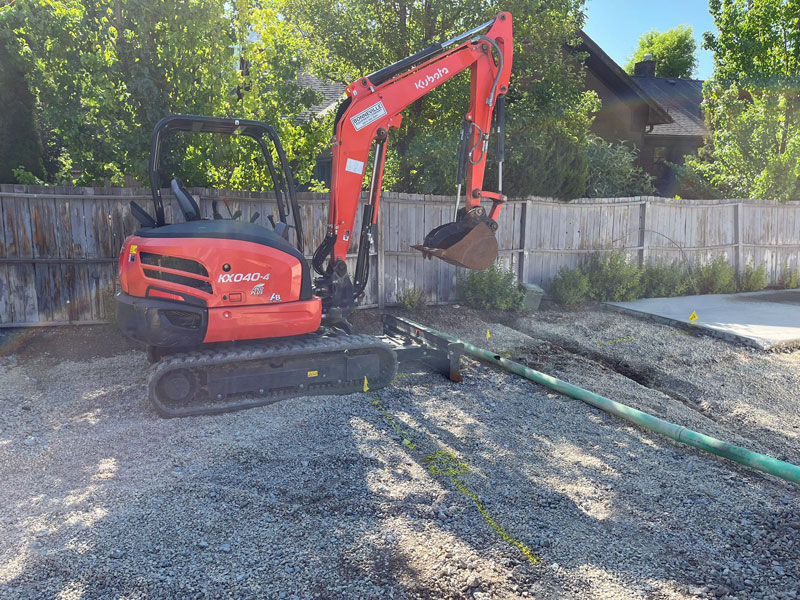
Repairing a pipe under a public street is vastly more complex than a yard repair. It requires specific municipal permits, traffic control plans, and "street opening bonds" to ensure the road is restored to city standards. Our team is fully licensed and bonded to perform these "off-property" repairs. We handle the bureaucracy and the logistics of working with the city water department, ensuring that your repair is compliant with all local codes and regulations.
Why You Need a Contractor with Municipal Experience
Working in the public right-of-way involves coordinating with other utility providers to avoid hitting gas or fiber-optic lines. It is not a job for a standard residential plumber. We have the heavy equipment and the insurance credentials required to work in the street, protecting you from the massive liabilities associated with public-sector repairs. Hiring a professional with municipal experience is the only way to ensure the city "signs off" on your repair without issue.
Contact Let's Fix Plumbing Today!
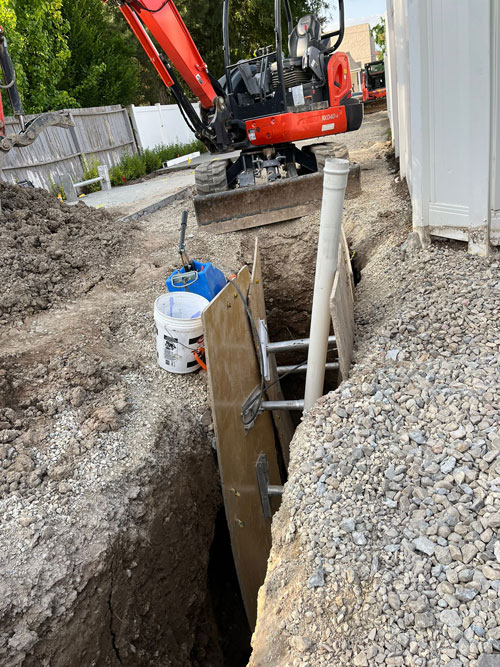
Let's Fix Plumbing is a fully licensed and insured plumbing business servicing the West Mountain, 84651 area. We offer a broad range of sewer line replacement services in Utah. Give us a call today at (801) 346-9896 to schedule service.