 Skip to content
Many older properties in West Valley City, 84044 are still operating on outdated clay or cast-iron sewer lines that have surpassed their functional lifespan. Let's Fix Plumbing helps property owners transition to modern, root-proof piping materials that offer a lifetime of reliability. We focus on "future-proofing" your drainage system, replacing fragile, corroded lines with high-performance solutions designed for 21st-century demands.
Is your aging plumbing struggling to keep up? If you’re located in West Valley City, our modernization experts can help you avoid the cycle of emergency repairs. Contact us today to discuss your sewer replacement options.
Decoding Foul Odors: Is It a Clog or a Broken Sewer Pipe?
Identifying the Source of Sewer Gas
Persistent odors in or around your property are more than a nuisance; they are a warning. If the smell is localized to one sink, it may be a "dry trap" or a simple organic clog. However, if the smell of "rotten eggs" (hydrogen sulfide) is pervasive throughout the home or strongest in the yard, it usually indicates a breach in the sewer line. A broken pipe allows sewer gases to escape the "closed loop" of your plumbing and permeate your living space or soil.
The Difference Between Methane and Bio-Sludge Smells
Differentiating between the smell of decaying food in a drain and true sewer gas is key to determining your repair strategy. Sewer gas is often accompanied by a "damp" or "musty" smell, indicating that sewage is leaking into the ground beneath your home. This moisture can also trigger mold growth behind walls, adding a different layer of odor. If the smell worsens when you run water, it’s a strong indicator that the pipe is cracked and releasing gases under pressure.
How Professional Smoke Testing Finds the Leak
When a visual inspection isn't enough, we use "smoke testing" to find the exact location of a break. By pumping non-toxic artificial smoke into the sewer system, we can see exactly where it escapes—whether it's a cracked vent pipe in the attic or a broken main line under the driveway. This diagnostic precision allows us to target the repair exactly where it’s needed, preventing you from paying for unnecessary "guesswork" and ensuring your home’s air quality is restored.
Full Sewer Line Excavation: When Is It the Right Choice?
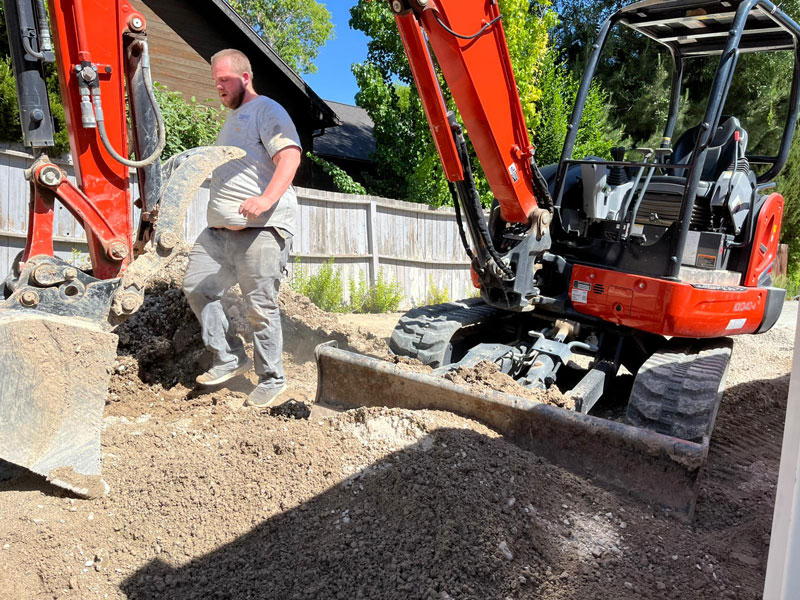
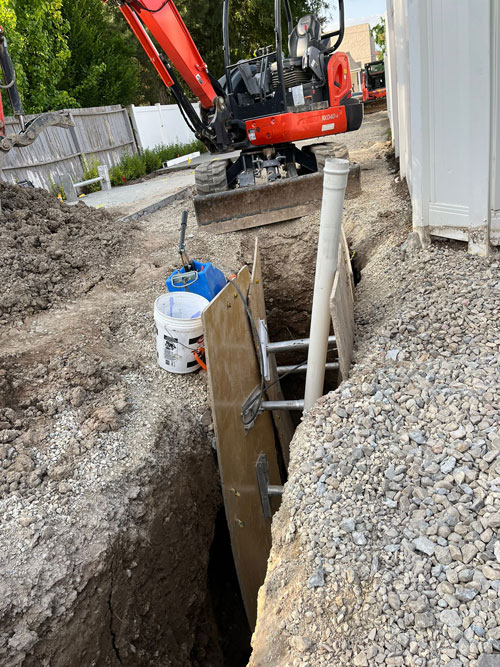
At Let's Fix Plumbing, we specialize in modern, state-of-the-art trenchless sewer repairs that save your lawn and landscaping. However, as your trusted West Valley City expert, our primary commitment is to the correct and permanent solution, not just the easiest one. While trenchless methods are ideal for many situations, there are specific cases where it is simply not an option, or worse, would only be a temporary patch on a more serious structural problem. In these scenarios, a full, traditional excavation is the only responsible choice to guarantee a long-term, functional sewer system.
When "No-Dig" Isn't an Option: Why Excavation is Necessary
We will only recommend a full excavation when our sewer camera inspection reveals a problem that trenchless technology cannot solve. This is a decision based on hard evidence, not guesswork.
- Severe Pipe "Belly" (Sag): Your sewer line must have a consistent downward slope (grade) for gravity to pull waste away. If shifting soil has caused a section of your pipe to sink or "sag," it creates a "belly" where water and solids pool permanently. You cannot line or burst a pipe with a severe belly; you would just have a newly-lined pipe that still doesn't drain. Excavation is the only solution, as it allows us to dig up the pipe, rebuild a new, stable gravel base, and set the new pipe at the correct grade.
- Completely Collapsed Pipes: Trenchless methods require a host pipe to be in place. If the pipe is totally "pancaked" flat or crushed into rubble, there is no path to pull a new pipe through (bursting) and no structure to apply a liner to (lining). The collapsed sections must be dug up and removed.
- Failing Orangeburg Pipe: If your West Valley City, 84044 home was built between the 1940s and early 1970s, you may have Orangeburg pipe. This is a tar-infused wood fiber pipe that was a common post-WWII material. With age, it softens, blisters, delaminates, and deforms under pressure. It has no structural integrity and cannot be lined or burst. It must be completely dug up and replaced with modern PVC.
- Improper Initial Installation: Sometimes, the original line was installed with incorrect fittings, improper materials, or an insufficient grade from the start. A simple repair won't fix a fundamental engineering flaw; the system must be excavated and re-engineered correctly.
Our Safe & Precise Excavation Process
If excavation is deemed necessary, our process is built around safety, precision, and complete restoration to protect your property.
- Full Safety & Utility Locating: Before any soil is moved, we coordinate with Blue Stakes of Utah (811) to have every underground utility—gas, electric, water, and communications—located and clearly marked. Your property's safety is our top priority.
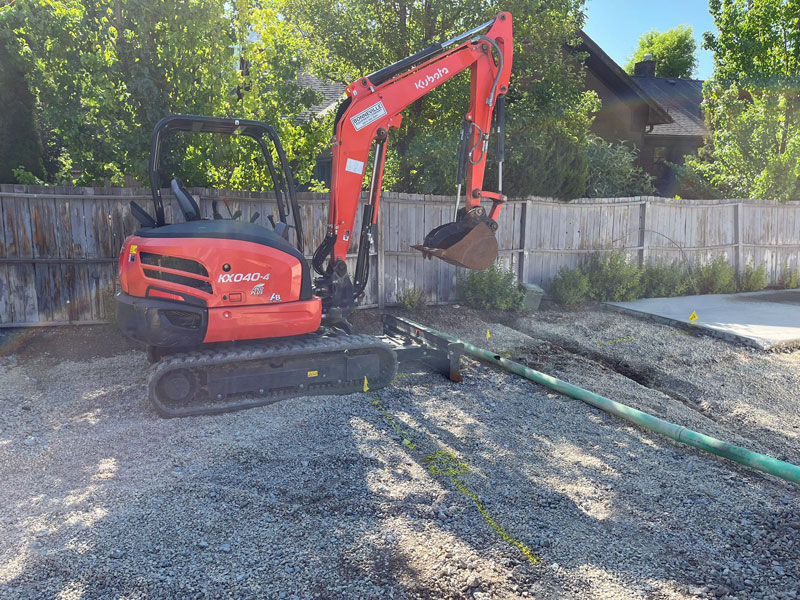
- Surgical Trenching: We don't just send in a random backhoe. We use protective mats and plan our excavation to be as minimal and precise as possible, digging a clean, stable trench that provides safe access to the failed pipe.
- Correct Bedding & Installation: This is the most critical step. After removing the old pipe, we build a new bed of crushed stone, which is graded perfectly for optimal flow. We then install your new, high-grade sewer pipe, ensuring every joint is solid and the slope is correct. This prevents future bellies and failures.
- Thorough Testing & Compaction: We test the new line before we bury it to confirm its integrity. We then backfill the trench by compacting the soil in layers (or "lifts") to prevent your yard from sinking over time, leaving you with a stable, secure, and permanent solution.
Why Choose Let's Fix Plumbing
- Locally Owned & Operated
- 24/7 Emergency Services
- Licensed & Uniformed Technicians
- 5-Star Google and Yelp Reviews
- Upfront Estimates
- Easy Online Appointments
Risking Your Pipes: How DIY Attempts Can Lead to Catastrophic Failure and Flooding.
When your main sewer line is clogged, the situation is stressful, and the temptation to save money with a do-it-yourself solution is powerful. But your main sewer line is not the place to experiment. This complex system, buried yards underground and made of aging materials, is extremely vulnerable. DIY attempts, from harsh chemicals to rented power tools, are a blind gamble that can—and often does—go horribly wrong, turning a simple blockage into a catastrophic pipe failure and a devastating sewage flood. Before you risk your property, let the experts at Let's Fix Plumbing explain the dangers we see across West Valley City, 84044 every week.
The DIY Gamble: A Recipe for Disaster
Amateur tools and guesswork are the direct cause of many of the worst sewer emergencies we respond to. Here is how DIY attempts lead to failure:
- The Chemical Mistake (Creating a Toxic Flood): When you pour liquid drain cleaner down a fully blocked main line, it doesn't reach the clog (which is often 80+ feet away and made of roots). Instead, it mixes with the backed-up sewage. When the blockage inevitably fails to dissolve, that toxic, caustic "black water" has nowhere to go but back up into your home, creating a hazardous biohazard spill that requires professional remediation.
- The Rental Auger Mistake (Causing the Collapse): This is the single fastest way to cause a "catastrophic failure." You are operating a powerful, rotating steel cutter completely blind inside a 50+ year-old pipe. That brittle clay or corroded cast iron cannot withstand the force. The auger head will shatter the brittle pipe, get snagged on a separated joint, or shred aging Orangeburg pipe. You will have personally caused the pipe to collapse, turning what could have been a trenchless repair into a mandatory, property-destroying full excavation.
- The Pressure Washer Mistake (Forcing a Flood): A consumer pressure washer with a "jetter" kit is not a professional hydro-jetter. It lacks the pressure to cut roots and, more importantly, has no water recovery. When it hits a total blockage, all that water has nowhere to go but backward, up the pipe, and directly out of your floor drains and toilets, causing the very sewage flood you were trying to prevent.
Why "Professional Diagnosis" Isn't Just a Sales Pitch
Our professional process is the opposite of the DIY gamble. It is designed to eliminate risk at every step by removing the single most dangerous element: the guesswork.
- Step 1: Accurate Diagnosis (The Camera): We never use a tool blindly. Our process begins by feeding a high-definition sewer camera into your line. This is the only way to safely identify the pipe material (clay, cast iron, PVC), the exact nature of the problem (roots, collapse, grease, or belly), and the structural integrity of the pipe. This one step prevents every single DIY disaster.
- Step 2: The Correct Tool for the Job: Once we see the problem on video, we deploy the right solution. Unlike a rental auger, our professional high-pressure hydro-jetter is powerful enough to slice roots clean and scour pipe walls of sludge, and our technicians are trained to use it safely without damaging your pipes.
- Step 3: The Permanent Solution (Lining): Poking a hole with an auger is a temporary fix at best. After we clear your line, our camera allows us to offer the permanent fix: Trenchless Pipe Lining. We can create a new, structural, seamless pipe inside your old one, sealing all the cracks and making it impenetrable to roots. This ends the threat of future failures and flooding for good—a peace of mind DIY attempts can never provide.
Contact Let's Fix Plumbing Today!
Let's Fix Plumbing is a fully licensed and insured plumbing business servicing the West Valley City area. We offer a broad range of sewer line replacement services in Utah. Give us a call today at (801) 346-9896 to schedule service.