 Skip to content

Every appliance in a Salt Lake City house that touches water is quietly on a timer, and the mineral in the water is what sets it. A softener is the one piece of equipment that changes the input rather than the symptom. Installing one is a half-day job in most houses: a treated loop for the fixtures and the water heater, a drain line for the regeneration cycle, and a bypass so the system can be taken offline without shutting off the house.
Why Salt Lake City, UT Homes Soften Water
Our own guide to hard water in Utah puts the Wasatch Front at 15 to 30 grains per gallon, and notes the USGS classification treats anything above 10 as very hard. What that number turns into is ordinary and irritating: a kettle that furs up in weeks, glassware that comes out of the dishwasher cloudy, soap that will not lather, and shower doors that go opaque no matter what you spray on them. Those are the complaints. The expensive part happens out of sight, in the water heater and in the supply lines.
A softener does not filter. It swaps the calcium and magnesium for sodium or potassium across a resin bed, then flushes the resin on a cycle and starts again. That distinction matters when people ask whether a softener will fix taste or chlorine, because it will not. That is a filtration question, and the two are often installed together on the same wall.
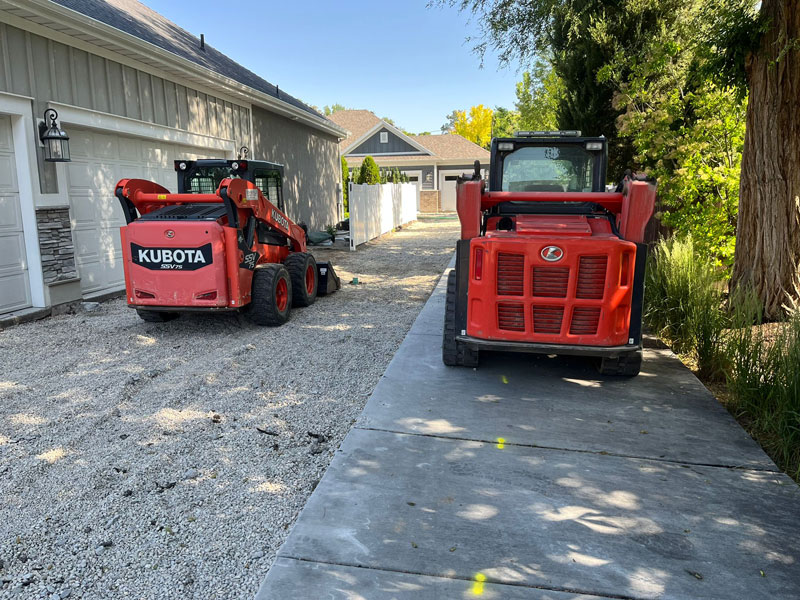
Where a Softener Goes in a Salt Lake City, UT House
The unit goes where the main comes into the house and before the water heater, so the heater is protected along with everything downstream of it. In most Salt Lake City homes that is a basement utility corner or a garage wall. Three things have to be present: the main line within reach, a drain the regeneration cycle can discharge into, and a power outlet for the valve head. Outside hose bibs and irrigation are normally left on the hard side on purpose, because there is no reason to soften water going onto a lawn.
Older Avenues and Sugar House houses take more planning than newer builds. The main often arrives in an awkward corner, the drain is not where you would like it, and the run to the water heater is longer than it looks. That is a layout problem rather than an obstacle, and it is worth walking before the unit is ordered rather than after.
Sizing, Salt and What Regeneration Actually Costs You
Sizing comes from two numbers: how hard your water is and how much of it the household uses. Undersize the unit and it regenerates constantly, burning salt and water. Oversize it and the resin sits too long between cycles. A metered head regenerates on demand rather than on a clock, which is the sensible default when hardness is this high, because a timer set for an average week wastes cycles on a quiet one.
Salt is the running cost, and how much you go through tracks hardness and usage rather than the brand on the cabinet. Potassium chloride is the alternative where sodium is a concern. Either way the tank is a thing you check, not a thing you forget, and the resin bed itself has a service life measured in years rather than decades.

Softener, Filter or Both in Salt Lake City, UT
| What you want to fix | What actually does it | What it will not do |
|---|---|---|
| Scale on fixtures, cloudy glassware, soap that will not lather | A whole-house softener on the main | Change taste or smell |
| Chlorine taste at the kitchen tap | A carbon filter, point of use or whole house | Stop scale forming |
| Scale shortening the water heater | A softener installed ahead of the heater | Recover a heater already full of sediment |
| Sediment and grit after street work | A sediment pre-filter ahead of the softener | Soften anything by itself |
| Sodium added to drinking water | A potassium chloride softener, or a filtered drinking tap | Remove hardness at zero cost |
| Hard water reaching the lawn and garden | Nothing, and that is deliberate | Need softening in the first place |
Installation Day in Salt Lake City, UT
Water goes off at the main, the unit is set on a level base, and the loop is cut into the supply ahead of the heater with a bypass fitted. The drain line is run with an air gap so nothing can siphon back, the brine tank is filled, and the system is put through a manual regeneration before anyone leaves, so the first cycle happens while a plumber is standing next to it. Then the head is programmed to your hardness and household size, and you get shown the bypass, the salt lid and the one setting worth touching.
Water Softener Installation FAQs
How hard is the water in Salt Lake City?
Hard enough that it is the first thing most homeowners here mention about their plumbing. Our hard water guide puts the Wasatch Front in the 15 to 30 grains per gallon range, against a USGS classification that calls anything over 10 very hard. For a precise figure on your own tap, your water provider publishes an annual water quality report, and a test at the kitchen sink settles it in minutes.
How long does a water softener installation take?
Most installs are a half day once the location is settled. What stretches it is plumbing the drain line and the bypass in a house where the main, the drain and the power outlet are not near each other, which is common in older Salt Lake City basements.
Will a softener make my water taste salty?
No. The sodium exchanged into softened water is small, and what people taste as salty is almost always something else. If sodium is a concern for medical reasons, a potassium chloride unit or a separate unsoftened drinking tap at the kitchen sink both solve it.
Do I still need a filter if I have a softener?
For scale, no. For taste, smell or sediment, yes, because a softener is an exchange system rather than a filter. A lot of Salt Lake City installs end up as a sediment pre-filter, then the softener, then a carbon filter at the drinking tap.
Can a softener be installed in a garage in Utah?
It can, and plenty are, but the garage is the one location where a freeze is a real risk on a cold night. The unit and the lines need to be protected, and an uninsulated garage on the east bench is a harder case than an attached one on the valley floor.
How often does a softener need servicing?
Salt gets checked monthly and topped up. Beyond that, the valve head and the resin bed are what wear, and a unit that starts regenerating far more often than it used to is telling you something. Repairs are usually to the head rather than the tank.
Related Water Treatment and Plumbing in Salt Lake City, UT
Softening the water is usually one decision inside a larger one: water softener repair and replacement when a unit already exists and has stopped working, whole-house repiping when the pipes are already scaled beyond help, water heater replacement for the appliance hard water kills first, tankless water heaters which are especially sensitive to scale, leak detection when a pinhole has already appeared, and the Salt Lake City plumbing page for everything else.
Book a Water Softener Installation in Salt Lake City
Tell us where the main comes into your house, whether there is a drain and an outlet nearby, and how many people are living there, and we can size a unit and quote the install from that. To book a water softener installation in Salt Lake City, call Lets Fix Plumbing at (801) 346-9896 or send the details through the form below.